🇨🇾 BOX NOW delivery in 5–7 working days ✅ Pay on delivery 📦 Free shipping from €50


Tirzepatide
Tirzepatide 5/10/15/30 mg
Peptology Ltd. · Peptides for weight loss
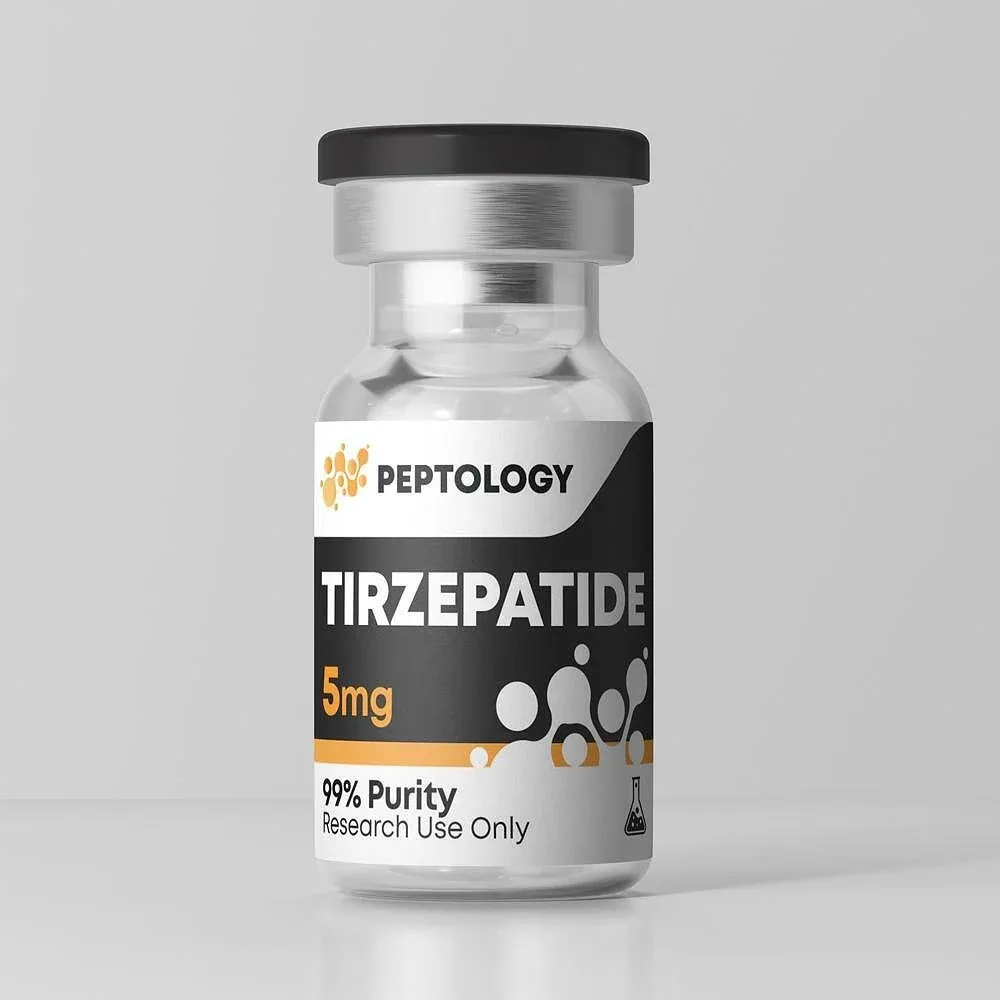
Tirzepatide is a dual GLP-1 and GIP receptor agonist that Peptology supplies strictly for laboratory research, in 5/10/15/30 mg. You can buy Tirzepatide in Cyprus online from €59.00, with same-day dispatch for orders placed by 15:00. 99%+ purity, HPLC/MS certificate for every batch, so every vial comes with documented quality data. Delivery in 5–7 working days with BOX NOW, free from €50; you pay on delivery – by card through the BOX NOW payment link, before you open the locker. The product is not intended for human or veterinary use.
59,00 € · In stock
- 5mg — 59,00 €
- 10mg — 99,00 €
- 15mg — 125,00 €
- 30mg — 159,00 €
For research use only / Not a medicine
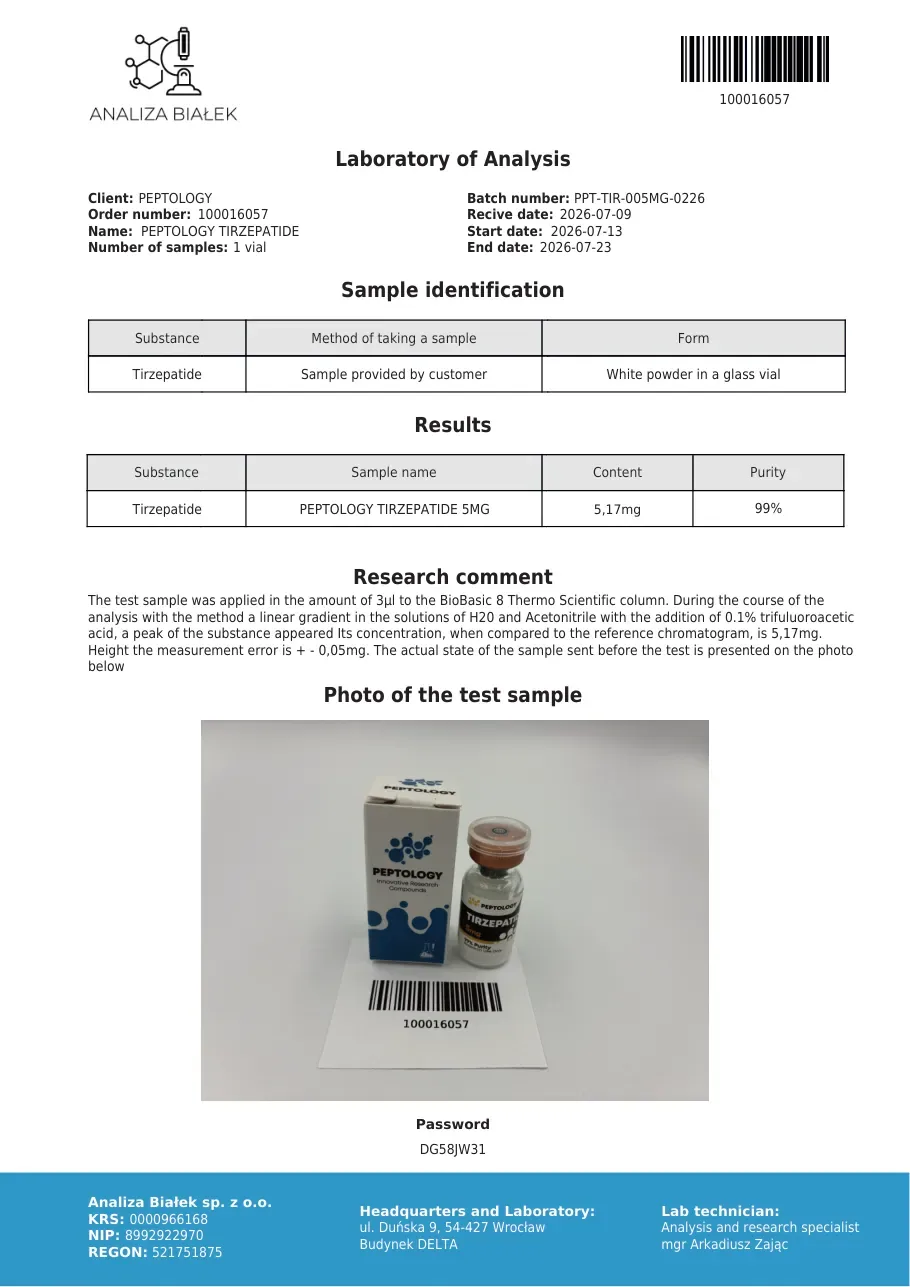
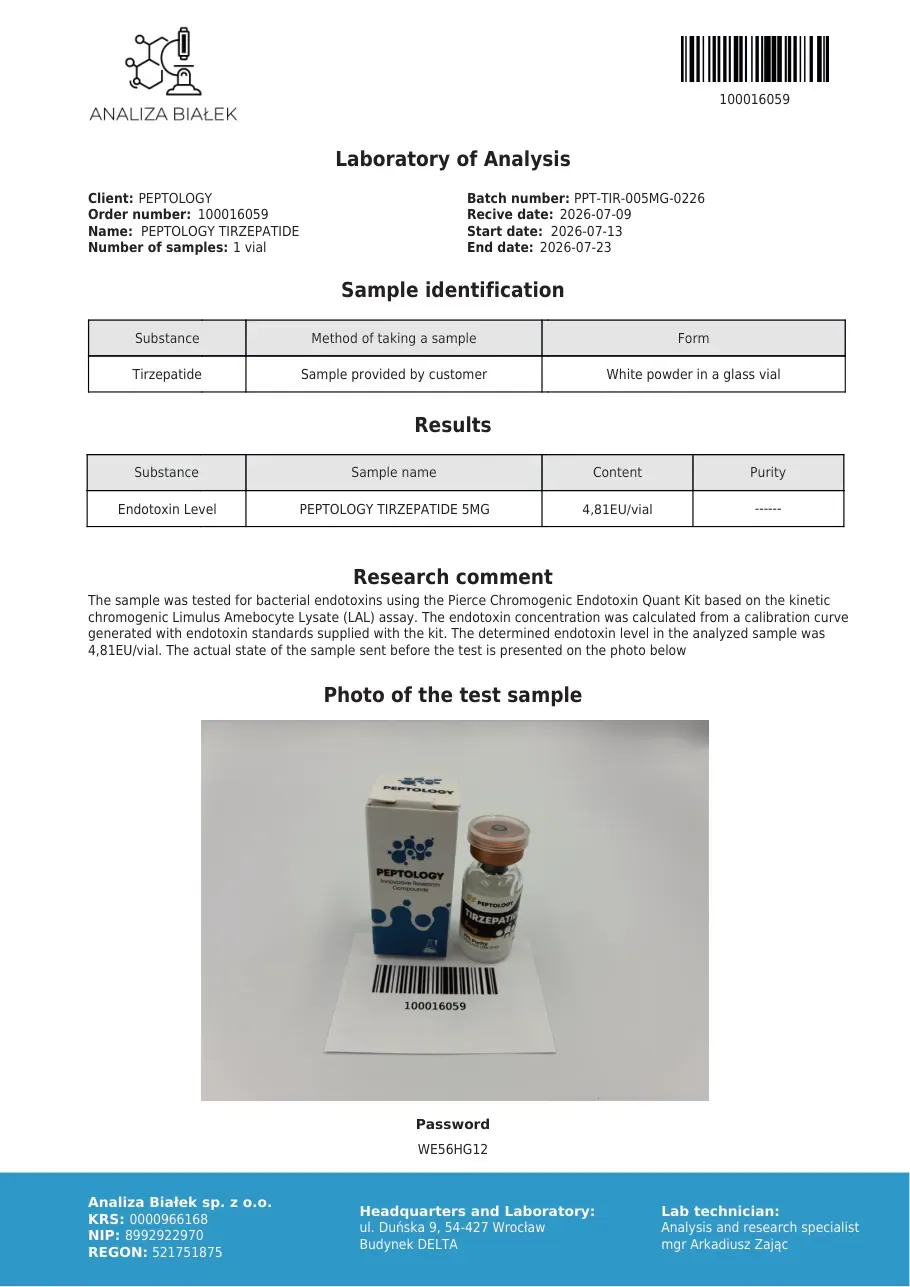
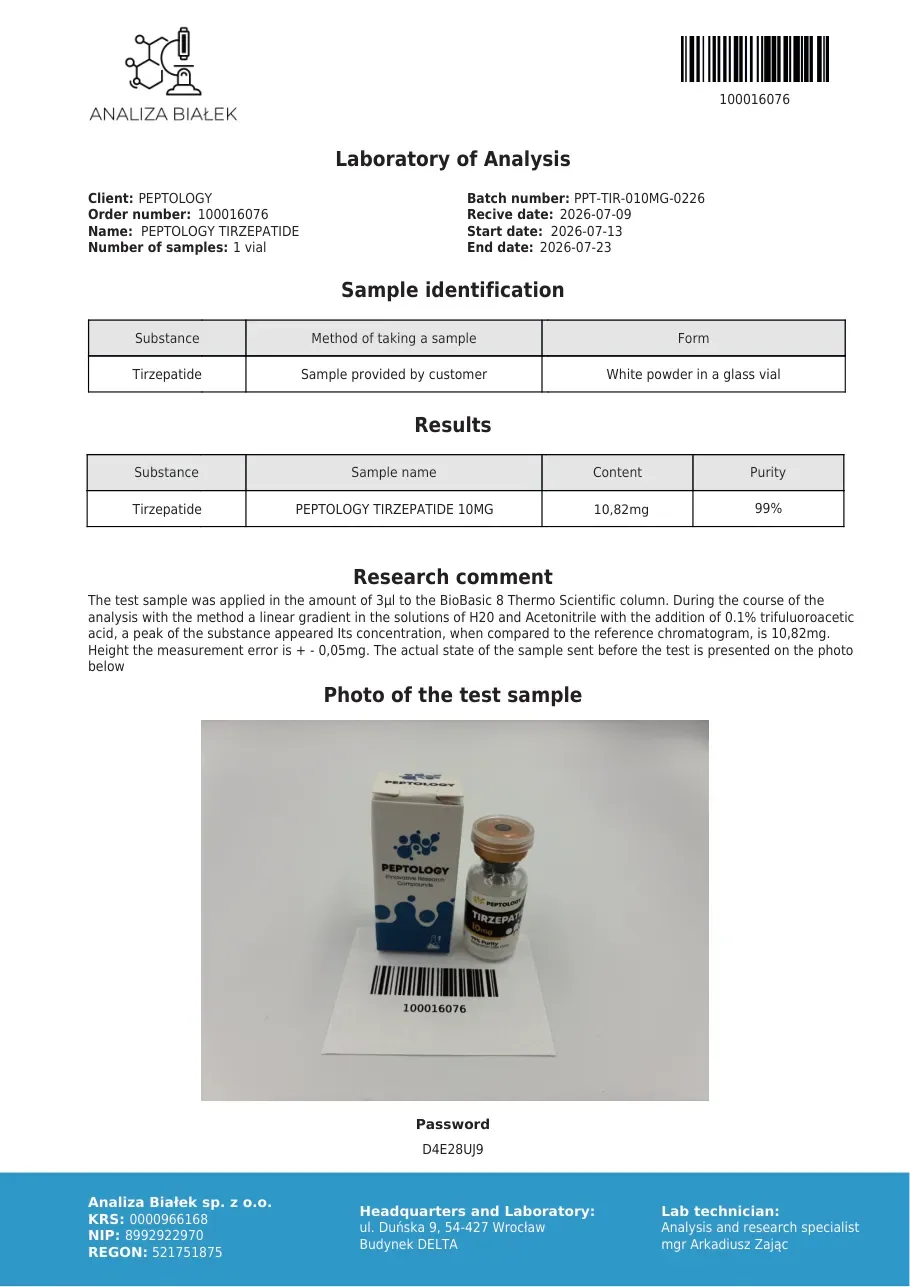
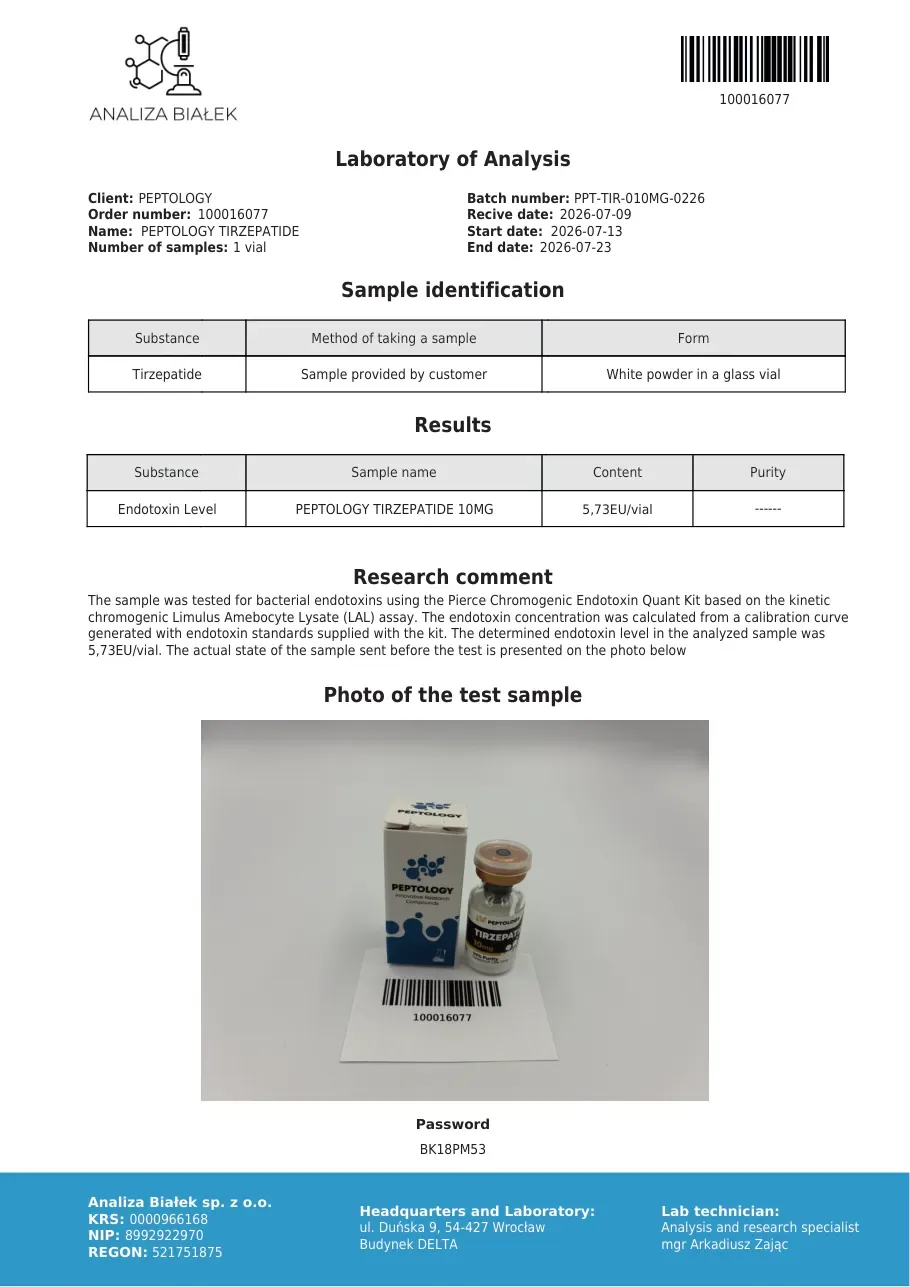
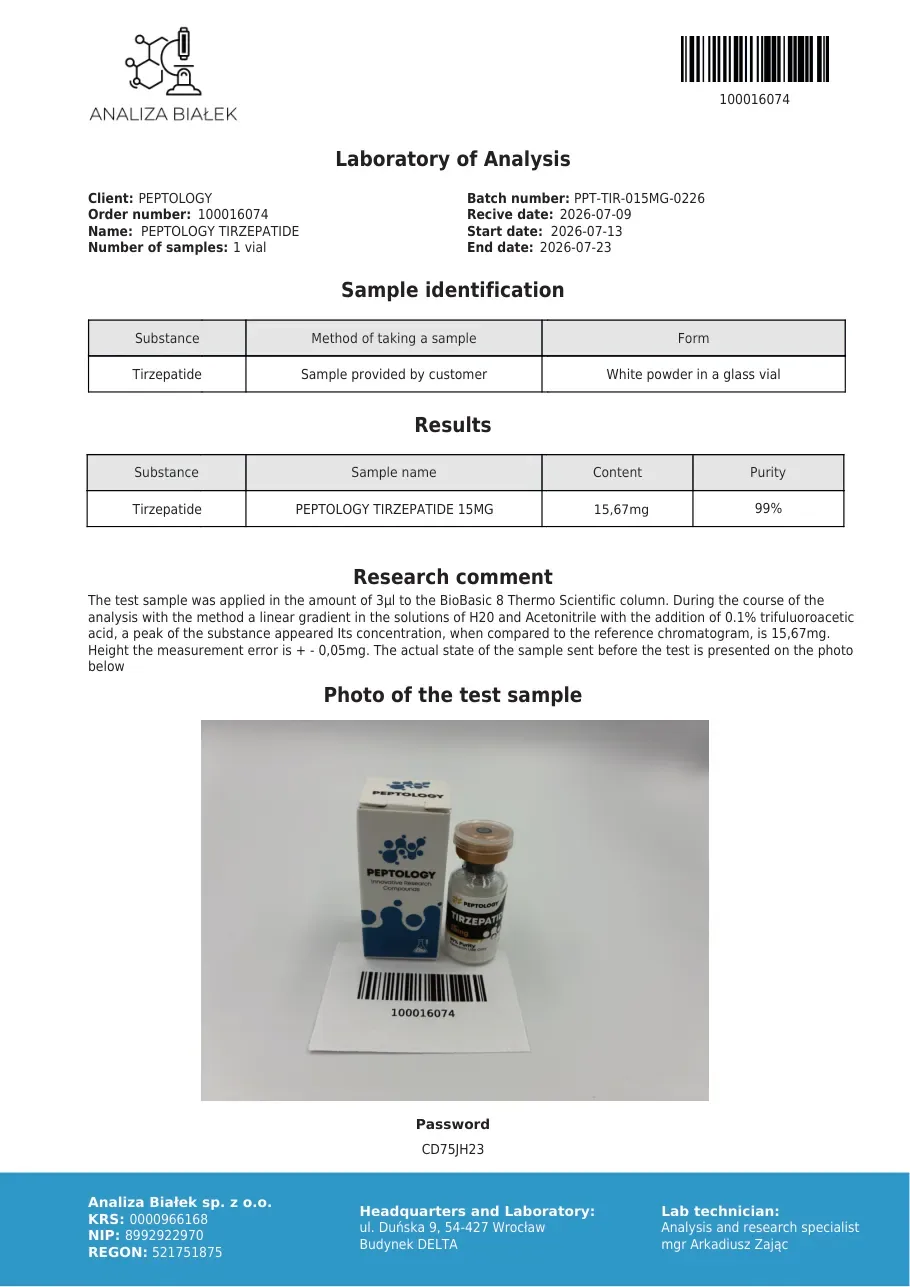
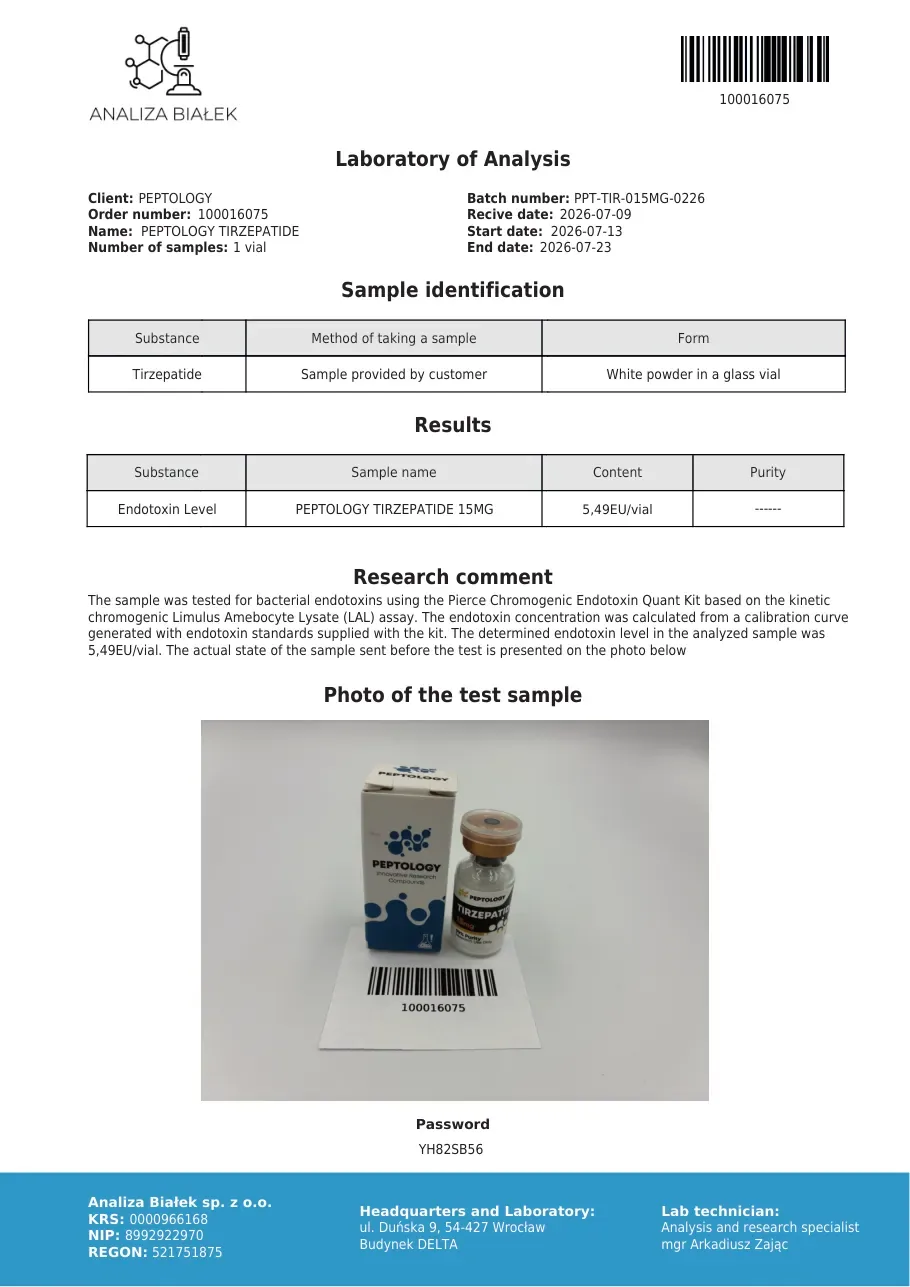
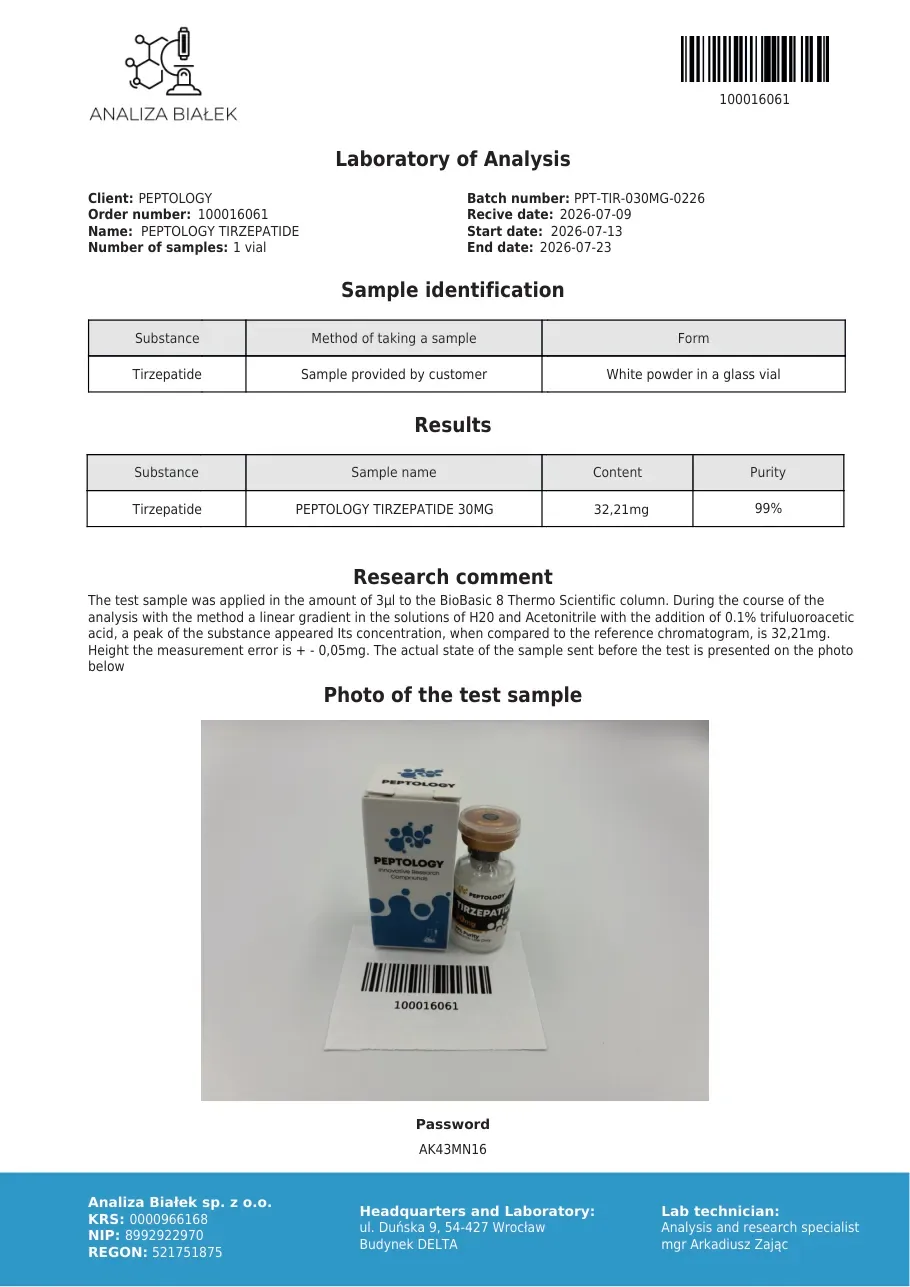
| Purity | >99% |
|---|---|
| Method | HPLC + LC/MS |
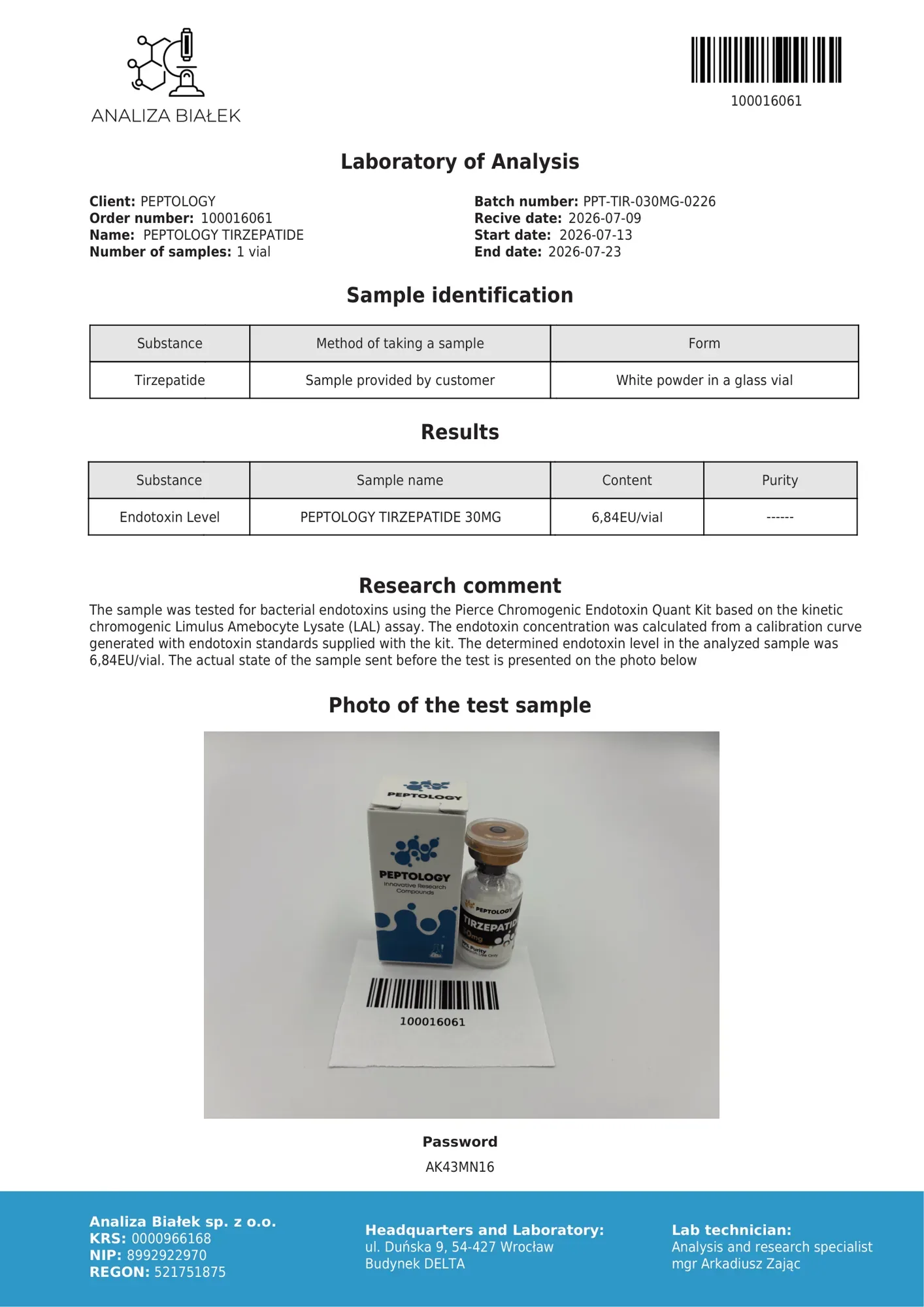
| Laboratory | Analiza Białek |
| Batch | 0226 |
Last updated: 19/10/2026
What is Tirzepatide?
Tirzepatide (CAS 2023788-19-2) is a synthetic peptide analogue, described in the clinical and pharmacological literature as a dual agonist — a single molecule that simultaneously activates two incretin receptors: GLP-1 (glucagon-like peptide-1) and GIP (glucose-dependent insulinotropic polypeptide). This dual action distinguishes tirzepatide from single GLP-1 agonists and is the basis of the scientific interest in the molecule in the fields of metabolism, glycaemic control and body composition.
Tirzepatide holds the intermediate position in the evolution of the incretin agonist class. Unlike the single agonist Semaglutide (GLP-1 only), tirzepatide adds a GIP component, which in the literature is linked with improved insulin sensitivity and an additional metabolic effect. The newer Retatrutide extends this approach with a third receptor — the glucagon receptor.
Tirzepatide has been studied in large-scale clinical programmes: SURPASS (type 2 diabetes) and SURMOUNT (obesity), including direct head-to-head comparisons with GLP-1 agonists. See also the other peptides for weight loss — GLP-1 agonists in our category.
In the Peptology version, tirzepatide is supplied as a lyophilised research peptide with purity above 99%, confirmed by independent laboratory analysis (CoA) for each batch. It is available in four vial sizes — 5 mg, 10 mg, 15 mg and 30 mg, depending on the scale of the research protocol. It is NOT the approved medicine — the product is intended exclusively for scientific, research and in vitro applications.
How tirzepatide works — dual GLP-1 / GIP mechanism
In clinical and preclinical publications, tirzepatide is described as a molecule with two simultaneous receptor actions. These two mechanisms work in a coordinated way and are described in the literature as simultaneous signalling at the GLP-1 and GIP receptors.
GLP-1
Glucagon-like peptide-1 — in the literature it is linked with activation of the GLP-1 receptor in central pathways, slowing of gastric emptying and glucose-dependent insulin secretion.
GIP
Glucose-dependent insulinotropic polypeptide — studied in relation to improved insulin sensitivity, lipid processing and an additional metabolic effect, complementary to the GLP-1 component.
SYNERGY
In the published data, the combined action at the two receptors is linked with a more pronounced effect on glycaemia and weight compared with the single-receptor approach.
Why the dual GLP-1 / GIP mechanism matters
Adding a GIP component to GLP-1 agonism is a fundamentally different approach compared with the single agonist Semaglutide. In the literature, GIP is described as a receptor that contributes to nutrient processing and insulin sensitivity — and, in combined action with GLP-1, leads to a stronger metabolic effect. Tirzepatide sits between the single and the triple agonists, such as Retatrutide.
This concept has been validated in direct head-to-head comparative studies — in SURPASS-2, in type 2 diabetes, tirzepatide showed a greater reduction in HbA1c and body weight compared with Semaglutide. These results come from controlled clinical trials and are not a guarantee of an individual result, nor a claim about the action of a research-grade product.
Pharmacokinetics and pharmacodynamics of tirzepatide
Tirzepatide is a peptide with a long systemic half-life, achieved through lipidation (attachment of a fatty chain), which prolongs binding to albumin and slows elimination.
- Half-life (literature): approximately 5 days
- Plasma protein binding: high (mainly to albumin)
- Structure: 39-amino-acid peptide with a C20 fatty chain
- Molecular formula / molecular weight: C225H348N48O68 · ≈4813 g/mol
- CAS number: 2023788-19-2
- Kinetics: linear in the range studied
Tirzepatide vs. Semaglutide vs. Retatrutide
The table below compares tirzepatide with the incretin peptides in the catalogue that act on one and on three receptors. All three molecules are studied for metabolic regulation and body weight control, but they act on a different number of receptors — Semaglutide on one (GLP-1), tirzepatide on two (GLP-1 + GIP) and Retatrutide on three (GLP-1 + GIP + glucagon). The data are presented for scientific reference and do not constitute a direct head-to-head comparison, except where explicitly stated.
| Tirzepatide | Semaglutide | Retatrutide | |
|---|---|---|---|
| Target receptors | GLP-1 + GIP (dual) | GLP-1 (single) | GLP-1 + GIP + glucagon (triple) |
| Position in the class | Dual GLP-1 / GIP agonist | Foundational GLP-1 agonist | Triple agonist — new generation |
| CAS number | 2023788-19-2 | 910463-68-2 | 2381089-83-2 |
| Half-life | ~5 days | ~7 days | ~6 days |
| In the Peptology catalogue | Lyophilised powder · 5/10/15/30 mg · for research only | Lyophilised powder · 5/10 mg · research only | Lyophilised powder · 5/10/15/30 mg · for research only |
| Effect on weight in studies | Up to ~22.5% at 72 wk (SURMOUNT-1) | ~15% at 68 wk (STEP 1) | Up to ~24% (Phase II) |
Sources: the SURMOUNT and SURPASS programmes (tirzepatide), including the head-to-head studies SURPASS-2 and SURMOUNT-5 against Semaglutide; STEP (Semaglutide); the Phase II study of Retatrutide (NEJM, 2023). The data presented come from different clinical programmes and should not be interpreted as a single direct comparison, nor as a claim about the result of a specific research-grade product.
Clinical studies of tirzepatide
The clinical programme of tirzepatide is developing in two main directions — type 2 diabetes (SURPASS) and obesity (SURMOUNT) — with tens of thousands of participants and several direct comparisons with single GLP-1 agonists. This makes its evidence base one of the strongest in the incretin agonist class.
SURPASS — type 2 diabetes
The SURPASS programme studies tirzepatide in type 2 diabetes. In SURPASS-2 — a direct head-to-head comparative study against Semaglutide — tirzepatide showed a greater reduction in HbA1c and body weight. The results support the hypothesis that the dual GLP-1 / GIP mechanism offers a stronger metabolic effect. These are the results of a controlled clinical trial and are not a recommendation for individual use.
SURMOUNT-1 — obesity
In SURMOUNT-1, in adults with obesity or overweight without diabetes, the highest dose (15 mg weekly) was associated with a mean body weight reduction of ~22.5% at week 72. It is among the strongest weight reduction results reported for a dual incretin agonist.
SURMOUNT-5 — direct comparison with Semaglutide
In the head-to-head comparative study SURMOUNT-5 in obesity, tirzepatide was associated with a greater mean weight reduction than Semaglutide (~20.2% vs ~13.7% at week 72). This is one of the few direct comparisons between a dual and a single incretin agonist.
SURMOUNT-2 — obesity with type 2 diabetes
SURMOUNT-2 studies tirzepatide in patients with obesity and co-existing type 2 diabetes — a population in which weight reduction is usually harder to achieve. Significant reductions in weight and glycated haemoglobin have been recorded compared with placebo.
Note: The information on clinical studies is provided for scientific reference and is based on published or publicly announced results. It does not constitute medical advice, a recommendation for use or a claim about the result of the product offered by Peptology.
Documented clinical results of tirzepatide
- ~22.5% mean weight reduction with 15 mg at week 72 in SURMOUNT-1
- Greater reduction in HbA1c and weight than Semaglutide in the direct head-to-head comparative study SURPASS-2 (type 2 diabetes)
- ~20.2% vs ~13.7% for Semaglutide in the head-to-head study SURMOUNT-5 in obesity
- Significant results also in type 2 diabetes with obesity in SURMOUNT-2
- Improvements in cardiometabolic markers — blood pressure, lipid profile and glycaemic control
All results mentioned relate to published clinical studies with tirzepatide and should not be interpreted as a promise of results, instructions for use or a claim about the action of the research-grade product offered by Peptology.
Related peptides in the Peptology catalogue
Researchers working with tirzepatide often also examine the following peptides from the category of metabolic agonists / GLP-1 agonists. Each of them has a purity certificate of over 99%:
Semaglutide
Single GLP-1 agonist
Retatrutide
Triple GLP-1 / GIP / glucagon agonist
Cagrilintide
Long-acting amylin analogue
CS10
Cagrilintide + Semaglutide combination
Peptide Matrix Water™
Stabilising solution for reconstitution
See the whole catalogue: Peptides for weight loss — GLP-1 agonists · Peptide research blog
Research warning: Tirzepatide is offered exclusively for scientific, research and in vitro applications. It is NOT the approved medicine and is not intended for the diagnosis, treatment or prevention of disease in humans or animals. All the information on this page is provided for scientific reference and does not constitute medical advice, a recommendation for use or a claim of results. Use is the sole responsibility of the qualified researcher.
Can tirzepatide be combined with other peptides?
Combinations between metabolic peptides or with amylin analogues (such as Cagrilintide or the CS10 combination) are a subject of scientific interest because of complementary mechanisms, but have not been studied in a standardised way under controlled clinical conditions. They remain a subject of research and not a recommendation for use.
How does Tirzepatide compare with semaglutide in the studies?
In clinical studies, up to 22.5% weight reduction has been reported with tirzepatide, compared with an average of 15–16% with semaglutide in separate trials.
Molecule identity
| CAS number | 2023788-19-2 |
|---|---|
| Molecular weight | 4813 g/mol |
| Molecular formula | C225H348N48O68 |
| Class | Dual GIP and GLP-1 receptor agonist |
| Form | Lyophilised powder in a glass vial |
| Storage | Lyophilisate: 2–8 °C, dry and protected from light · after reconstitution: 2–8 °C |
References
- Jastreboff AM et al. Tirzepatide Once Weekly for the Treatment of Obesity. N Engl J Med. 2022;387:205–216.
- Garvey WT et al. Tirzepatide once weekly for the treatment of obesity in people with type 2 diabetes (SURMOUNT-2): a double-blind, randomised, multicentre, placebo-controlled, phase 3 trial. Lancet. 2023;402:613–626.
- Frías JP et al. Tirzepatide versus Semaglutide Once Weekly in Patients with Type 2 Diabetes. N Engl J Med. 2021;385:503–515.
- Aronne LJ et al. Tirzepatide as Compared with Semaglutide for the Treatment of Obesity. N Engl J Med. 2025;393:26–36.
- Wilding JPH et al. Once-Weekly Semaglutide in Adults with Overweight or Obesity. N Engl J Med. 2021;384:989–1002.
- Jastreboff AM et al. Triple–Hormone-Receptor Agonist Retatrutide for Obesity — A Phase 2 Trial. N Engl J Med. 2023;389:514–526.
Buy Tirzepatide in Cyprus – price
You can buy Tirzepatide in Cyprus online from Peptology. Prices by strength:
- 5mg: €59.00
- 10mg: €99.00
- 15mg: €125.00
- 30mg: €159.00
Orders placed by 15:00 on working days ship the same day and are delivered in 5–7 working days with BOX NOW. Shipping costs €2 and is free from €50; you pay on delivery – by card through the BOX NOW payment link, before you open the locker.
Tirzepatide 5/10/15/30 mg: which strength
Tirzepatide is available in: 5/10/15/30 mg.
Available strengths: 5 mg, 10 mg, 15 mg and 30 mg
Tirzepatide is available in four lyophilised forms, covering different scales of research work — from individual in vitro series and validation experiments to longer protocols with higher peptide consumption.
5 MG
Initial form
Suitable for validation experiments, individual in vitro series and short-term laboratory protocols.
10 MG
Typical form
A balanced choice for repeated cell series and medium-length protocols.
15 MG
Extended form
Suitable for longer research series and protocols with a higher working-solution concentration.
30 MG
Maximum form
Economical for long-term protocols, multi-series models and work with a larger volume of material.
All four forms — 5 mg, 10 mg, 15 mg and 30 mg — have the same purity > 99% and an identical laboratory certificate for the corresponding batch. The choice of size depends on the scale of the protocol and not on the concentration of the active substance.
Research protocols
Important: The information below describes the doses used in the published clinical studies of tirzepatide. It is provided for scientific reference and is not a recommendation for individual use, medical advice or administration instructions. The research-grade tirzepatide offered by Peptology is not an approved medicine.
Tirzepatide has a long half-life (~5 days) and in the clinical programmes is administered once a week, with gradual escalation of the dose to reduce gastrointestinal effects. The typical titration scheme follows steps of 4 weeks:
- Typical titration scheme: 2.5 mg weekly (start) → increase by 2.5 mg every 4 weeks → up to the maximum dose of 15 mg
- Obesity (SURMOUNT): target doses of 5, 10 and 15 mg weekly SC, reached by escalation
- Type 2 diabetes (SURPASS): weekly SC doses according to the clinical protocol
Similar to the other incretin peptides, such as Semaglutide and Retatrutide, tirzepatide requires slow titration for tolerability reasons — in the clinical studies the dose is increased gradually and does not start directly at the target level. These regimens are part of controlled clinical trials and are not a recommendation for self-administration.
Storage and reconstitution
Tirzepatide is supplied as a lyophilised (freeze-dried) powder in a vial. In lyophilised form the peptide is stable in refrigerator or room-temperature conditions, protected from light and moisture. After reconstitution, stability depends on the solvent used, with Peptide Matrix Water™ significantly extending the shelf life of the peptide.
- Before reconstitution: store in the original packaging, protected from light and moisture; for long-term storage a refrigerator (2–8 °C) or freezer is recommended. Shelf life: up to 24 months with correct storage.
- After reconstitution with Peptide Matrix Water™: stability in the refrigerator at 2–8 °C for up to 60 days under suitable laboratory conditions — the stabilising composition extends the shelf life of the peptide compared with typical solvents.
- After reconstitution with bacteriostatic or sterile water: stability in the refrigerator at 2–8 °C for up to 28 days under suitable laboratory conditions. Do not freeze the reconstituted solution again.
- Reconstitution: in a laboratory environment, Peptide Matrix Water™, bacteriostatic or sterile water for injection is usually used, depending on the specific research protocol.
- Concentration: determined according to the contents of the vial (5, 10, 15 or 30 mg) and the aims of the research; it can be calculated with our peptide reconstitution calculator.
- Homogenisation: the solvent is added slowly along the wall of the vial, without vigorous shaking — peptide bonds are sensitive to mechanical stress.
Tip for laboratory work: When ordering, you can add Peptide Matrix Water™ to the basket — a stabilising solution designed for work with reconstituted research peptides.
Laboratory protocol — reconstitution, research protocols, storage
Standard protocol, applicable to all research peptides in the Peptology catalogue. For the concentration of the solution (mg/mL) per vial, use the peptide reconstitution calculator.
The 60-second protocol
1. SOLVENT
2. RECONSTITUTION
The solvent is added to the wall of the vial, without agitation, then wait 10–15 minutes.
3. CALCULATION
Calculator → concentration in mg/mL
4. STORAGE
+2 °C to +8 °C, up to 60 days with Peptide Matrix Water
Quick reference
| Parameter | Value |
|---|---|
| Form | Lyophilised powder |
| Solvent | Peptide Matrix Water |
| Volume for reconstitution | 1–3 mL — 3 mL maximum (capacity of the standard vial) |
| Storage before reconstitution | Room temperature, protected from direct light (refrigeration is not mandatory) |
| After reconstitution | Up to 60 days at +2 °C to +8 °C with Peptide Matrix Water |
What you will need
Precision pipette
Calibrated, 100–1000 µL — for accurate measurement of the volume of solvent added to the vial.
70% alcohol pads
Two pads — to disinfect the peptide vial and the solvent vial.
Stabilised solvent for lyophilised peptides. Why this one.
Five rules for reconstitution
| ✅ Correct | ❌ Wrong |
|---|---|
| Disinfect the stoppers and the work surface with 70% alcohol, work with gloves | Working without disinfection |
| The solvent is added slowly down the wall of the vial | Direct jet onto the powder — foaming and denaturation |
| Light swirling between the palms | Shaking — foam, on which the peptides denature |
| Wait 10–15 minutes at room temperature | Mechanical mixing or heating |
| Visual inspection: clear, without particles | Using a cloudy or coloured solution |
Calculating the concentration
⚠️ Maximum 3 mL of solvent. The standard vial does not allow a larger volume — do not exceed it during reconstitution.
- Concentration (mg/mL) = mg in the vial ÷ mL of solvent
- Volume per sample (mL) = amount per sample (mg) ÷ concentration (mg/mL)
- 1 mg/mL = 1 µg/µL · 1 mL = 1000 µL
Reconstitution per vial — solvent: Peptide Matrix Water. Concentration after addition (1 mg/mL = 1 µg/µL):
| Vial | + 1 mL | + 2 mL | + 3 mL |
|---|---|---|---|
| 5 mg | 5 mg/mL | 2.5 mg/mL | 1.67 mg/mL |
| 10 mg | 10 mg/mL | 5 mg/mL | 3.33 mg/mL |
| 15 mg | 15 mg/mL | 7.5 mg/mL | 5 mg/mL |
| 30 mg | 30 mg/mL | 15 mg/mL | 10 mg/mL |
👉 For any vial and solvent volume — use the calculator. It calculates the concentration (mg/mL, µg/µL) and the volume per sample (mL, µL).
Storage
BEFORE RECONSTITUTION
Room temperature, protected from direct light, in the original packaging. Refrigeration is not mandatory.
AFTER RECONSTITUTION
+2 °C to +8 °C, up to 60 days with Peptide Matrix Water. Discard the remainder after this period.
FREEZING
Not recommended. Freeze/thaw cycles degrade the structure of the peptide.
Four mistakes to avoid
1. Shaking for “faster dissolution”
Foam = denaturation. Only gentle swirling between the palms.
2. Unsuitable solvent
For the stability of the peptide structure, use only a sterile, purpose-designed solvent — Peptide Matrix Water is recommended.
3. Ignoring slight cloudiness
If it is not completely clear = the sample does not meet the criteria for work.
4. Removing it from the refrigerator “for an hour or two”
Short exposures add up and jeopardise stability.
Research status: All Peptology products are intended exclusively for laboratory use and research. They are not pharmaceutical products, have not been approved for human or veterinary use and do not replace medical advice. The protocol described is standard laboratory practice for working with lyophilised peptides.
How is tirzepatide stored?
The vial with the lyophilised powder is stored protected from light and moisture; for long-term storage a refrigerator or freezer is recommended. After reconstitution, stability depends on the solvent used: with Peptide Matrix Water™ — up to 60 days in the refrigerator at 2–8 °C; with bacteriostatic or sterile water — up to 28 days. In every case, avoid re-freezing.
Purity and certificate of analysis
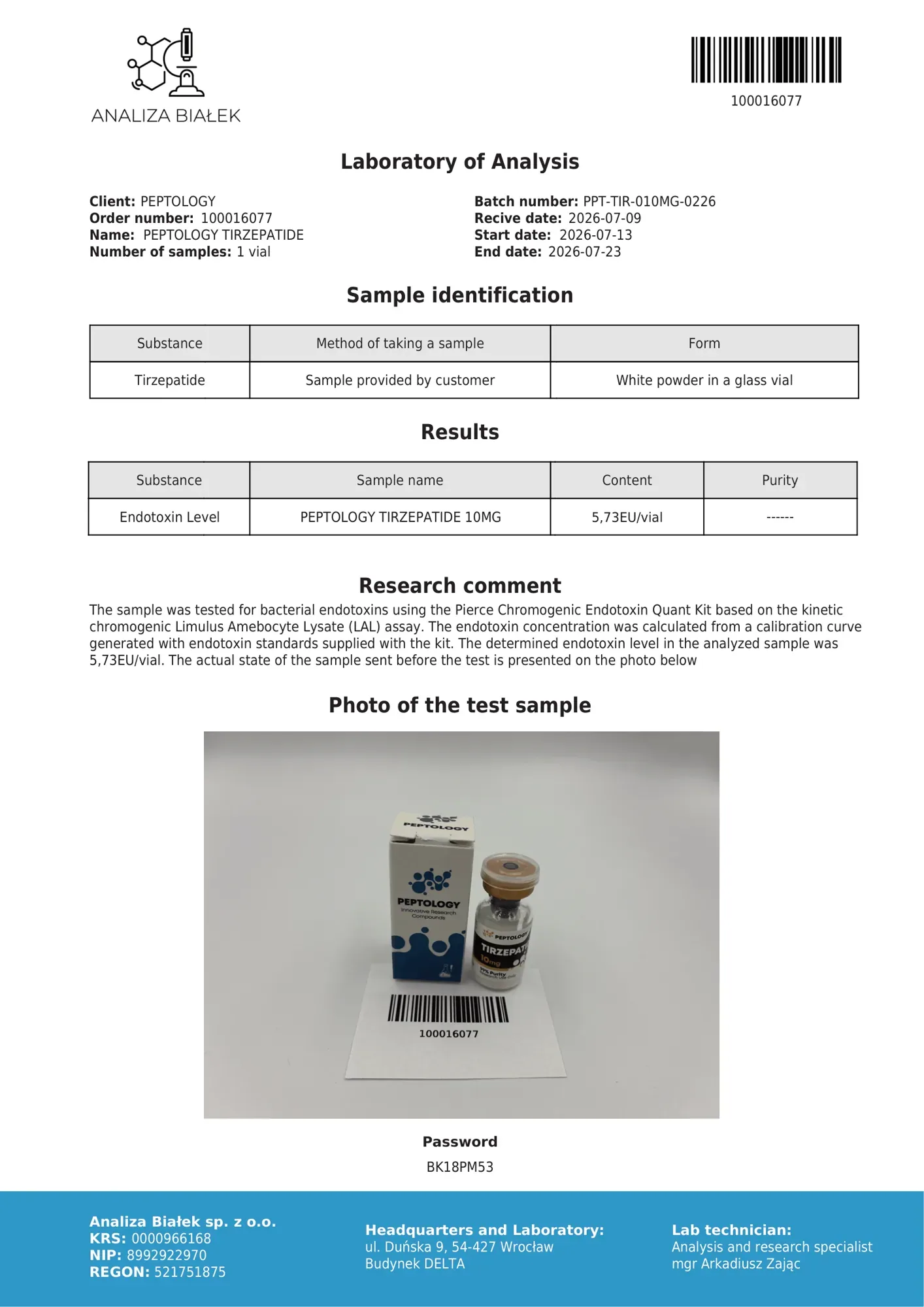
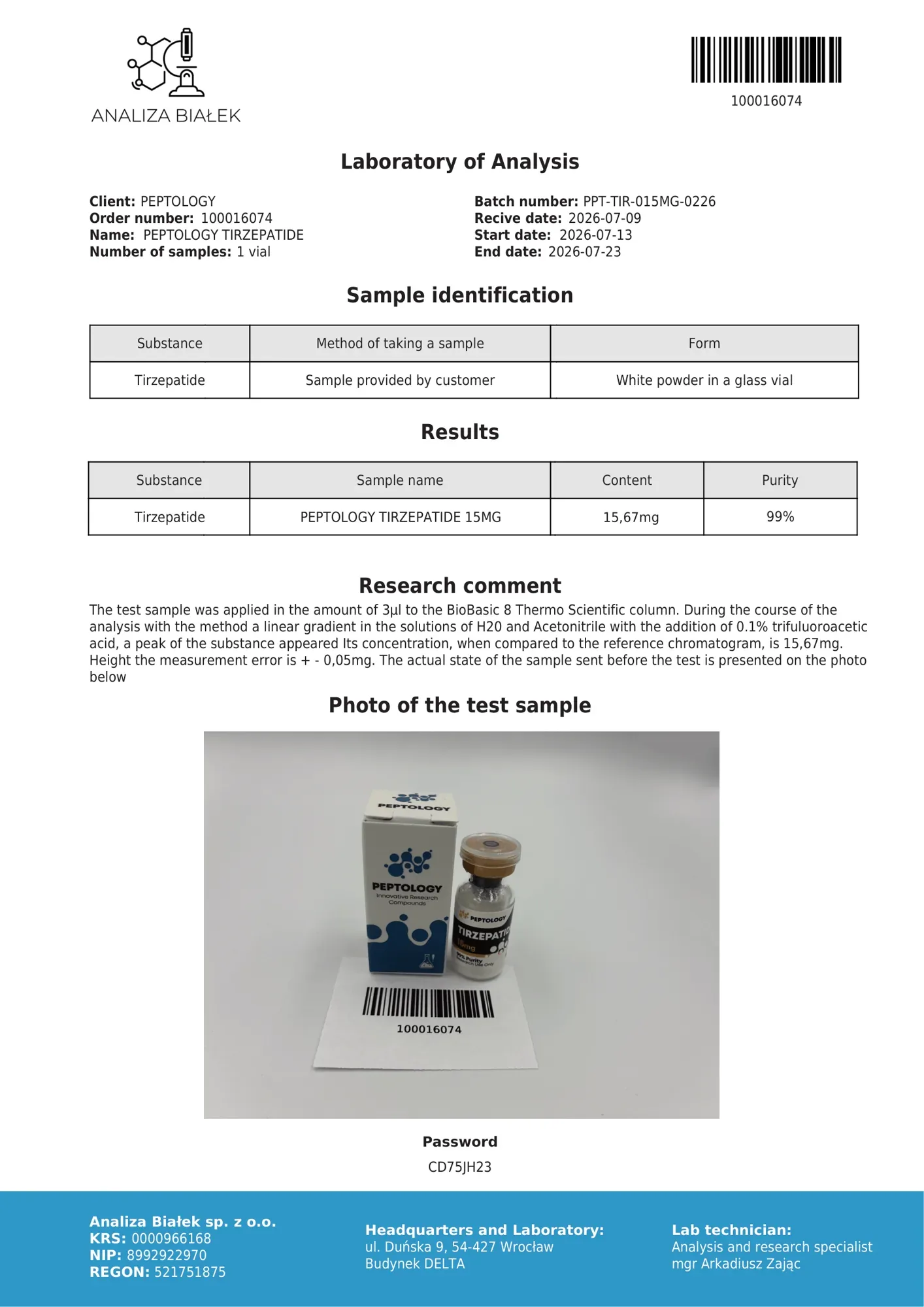
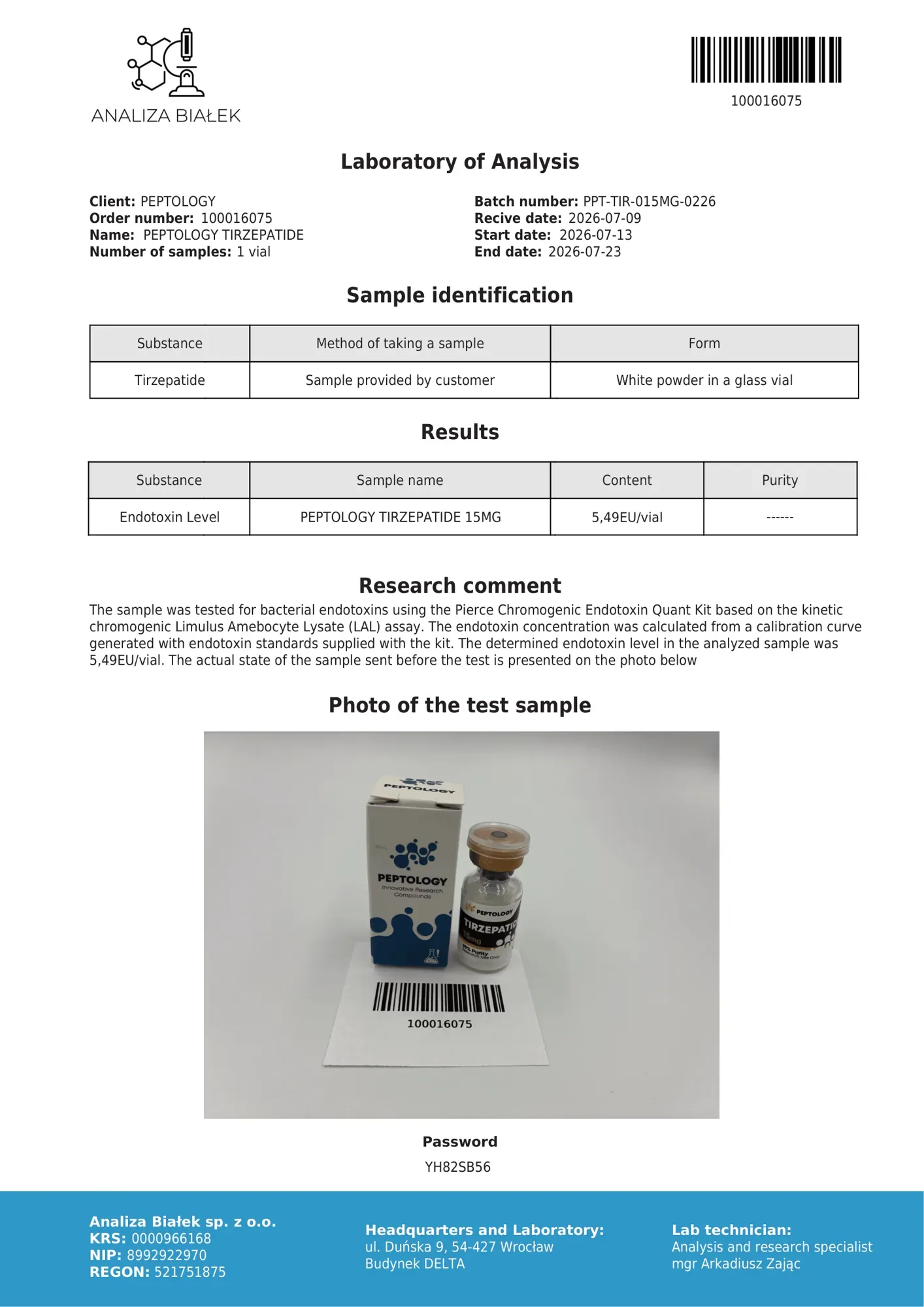
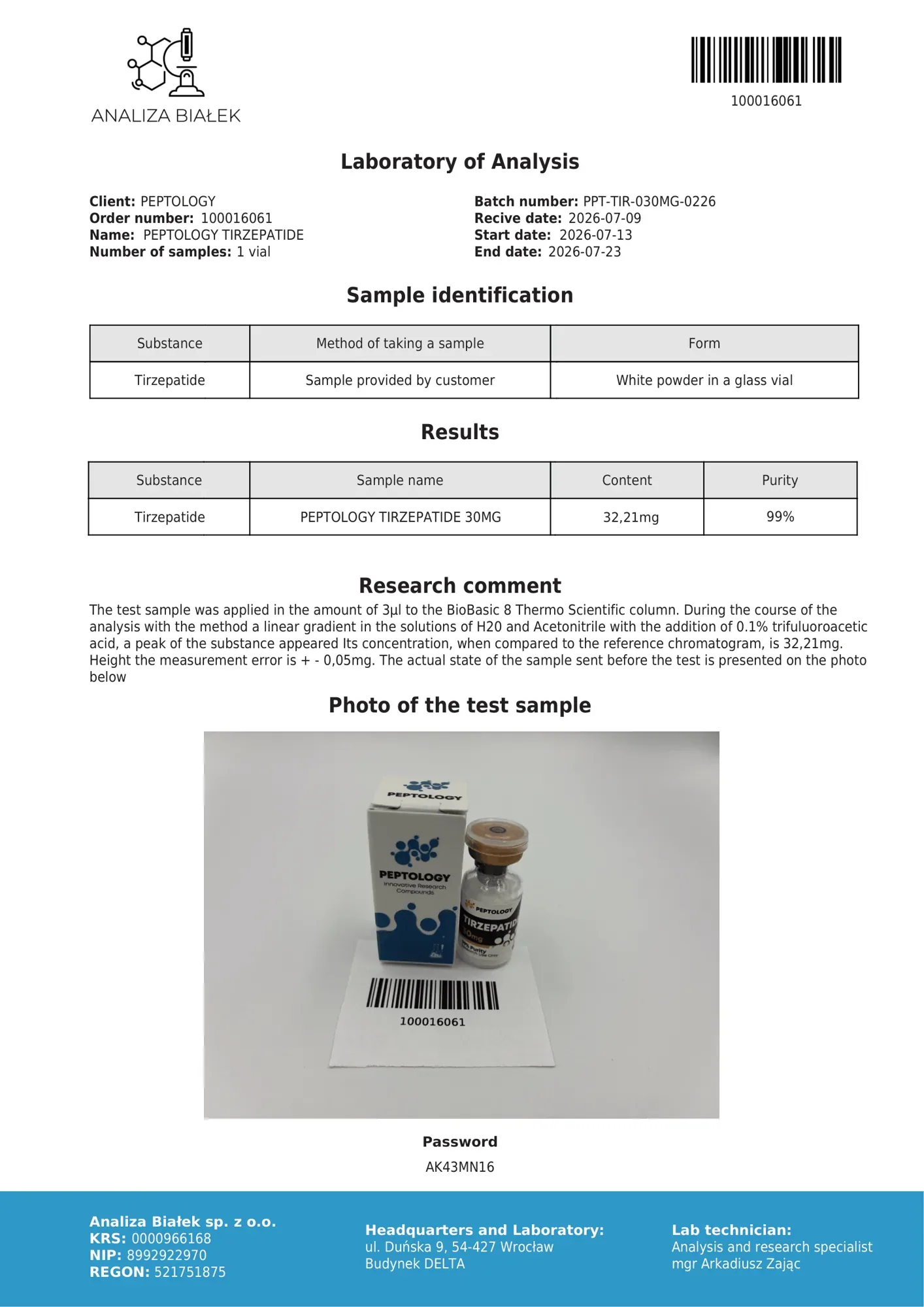
99%+ purity, HPLC/MS certificate for every batch.
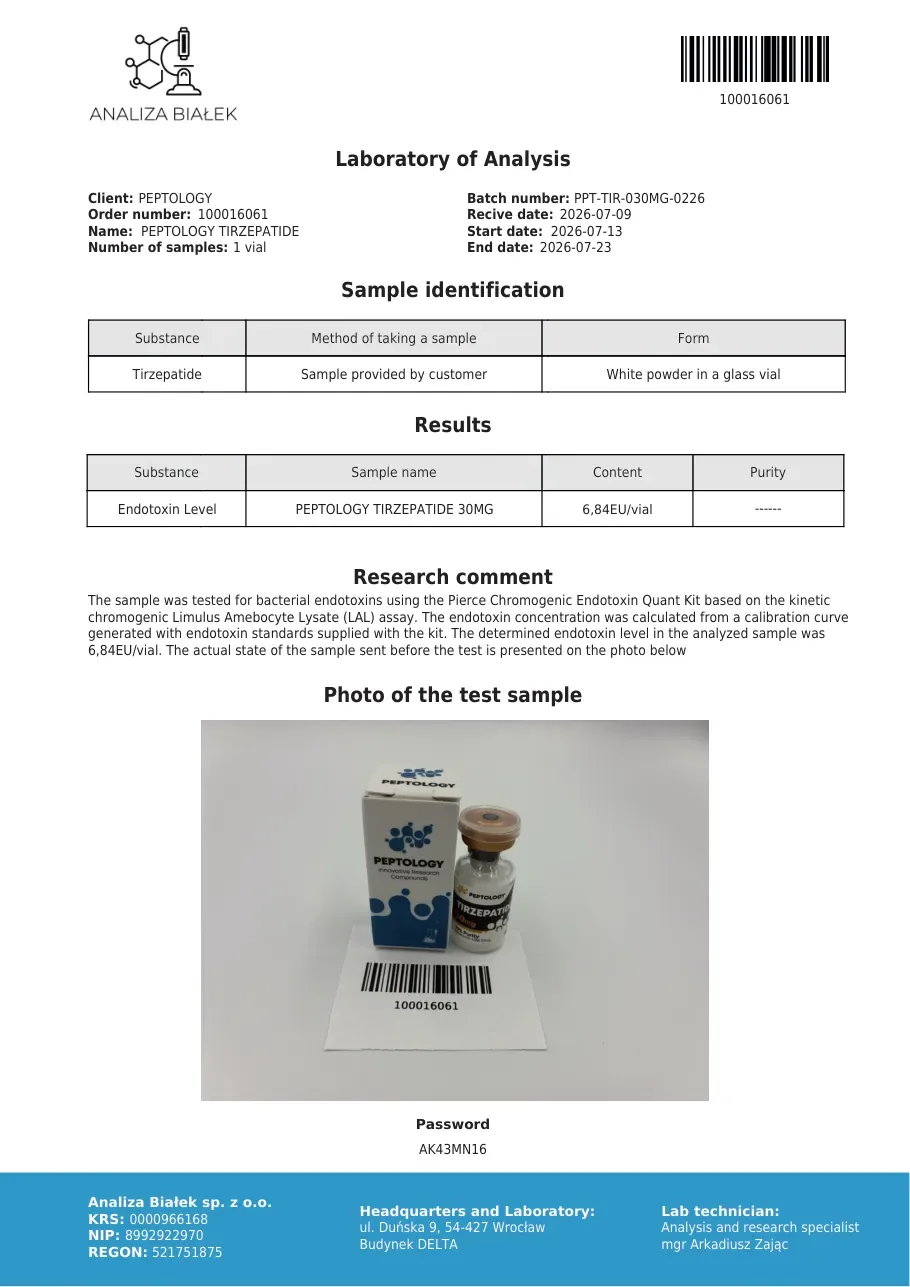
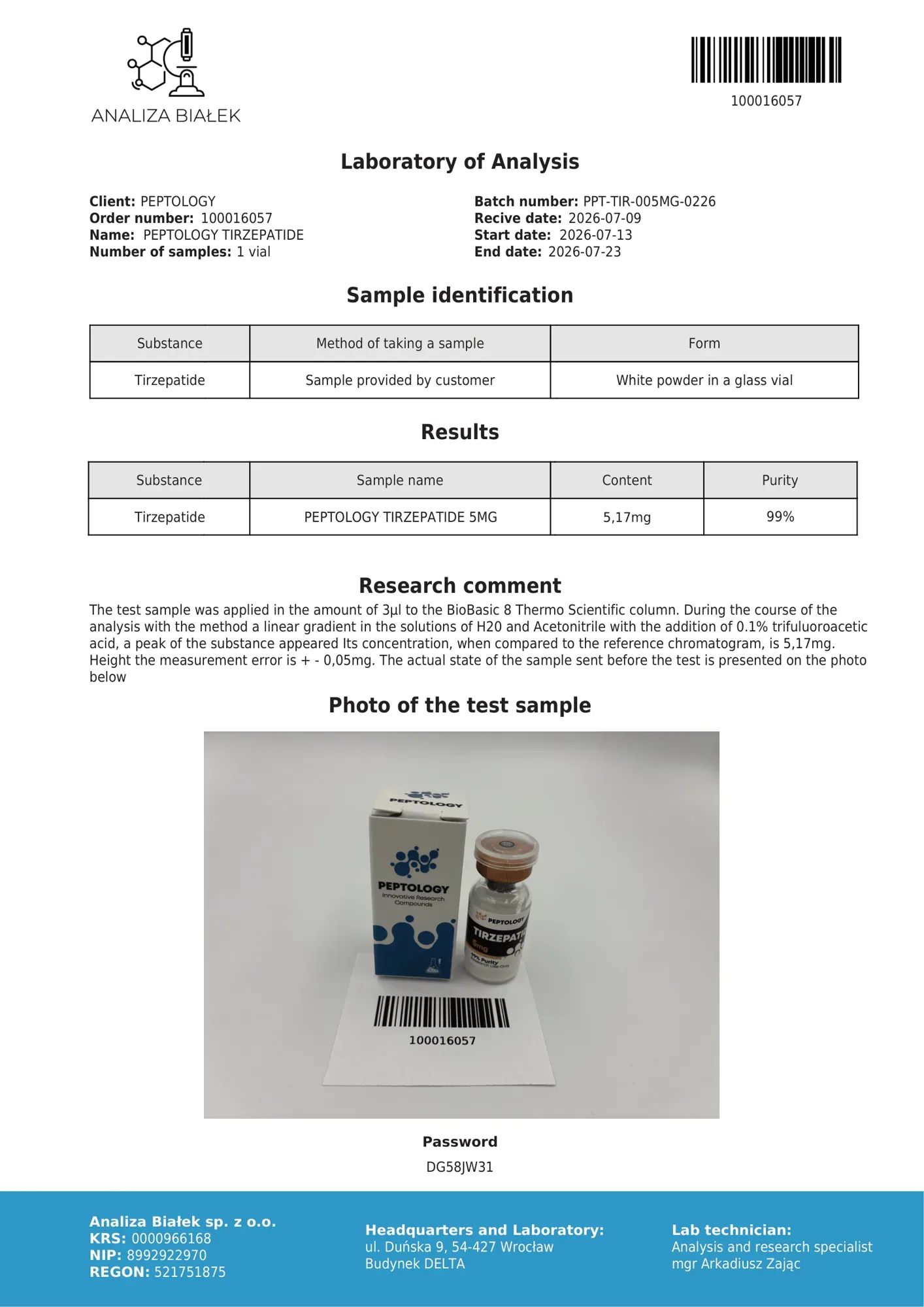
Tirzepatide - 5mg - Batch - 0226 - Purity & Endotoxins
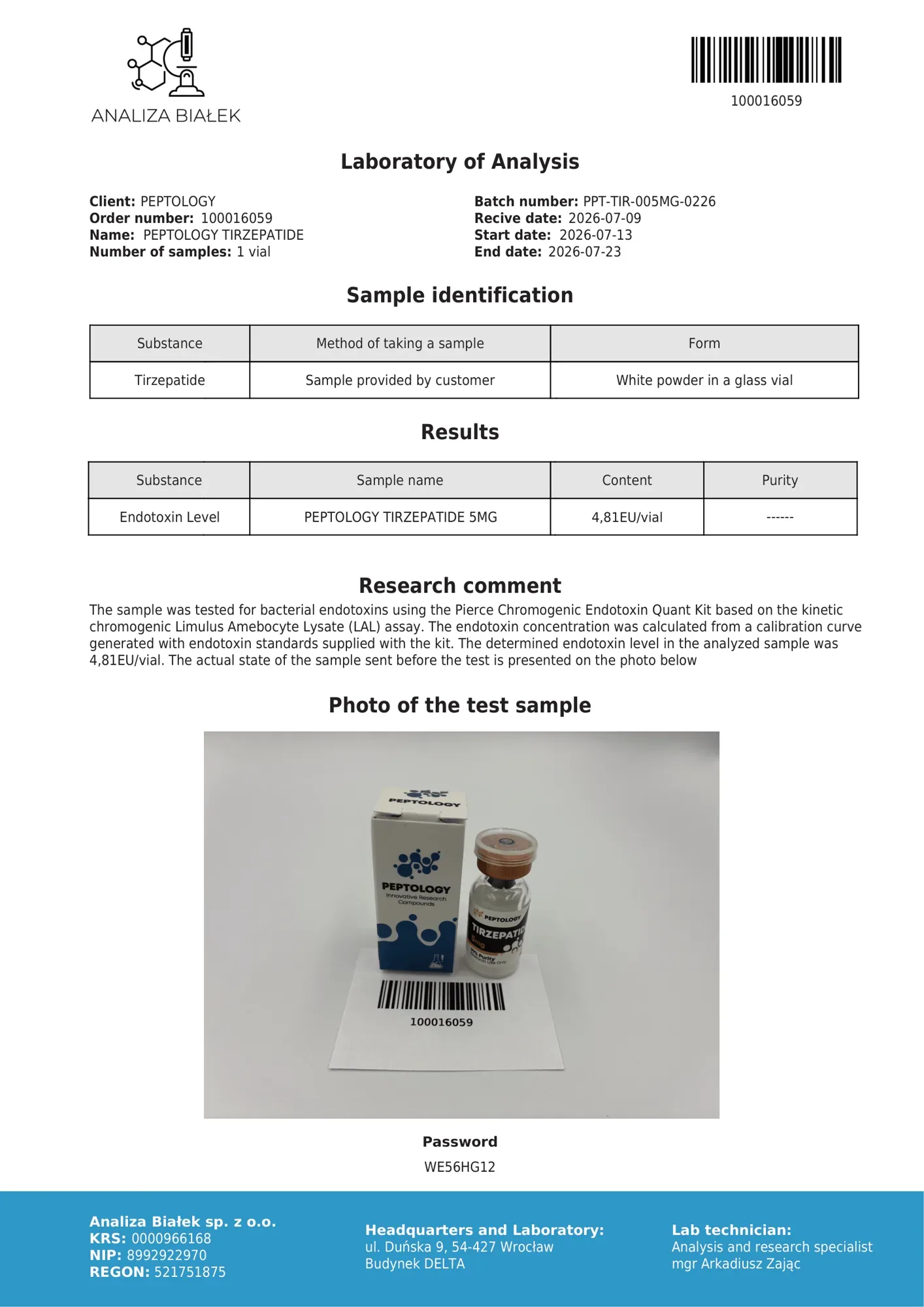
Tirzepatide - 10mg - Batch - 0226 - Purity & Endotoxins
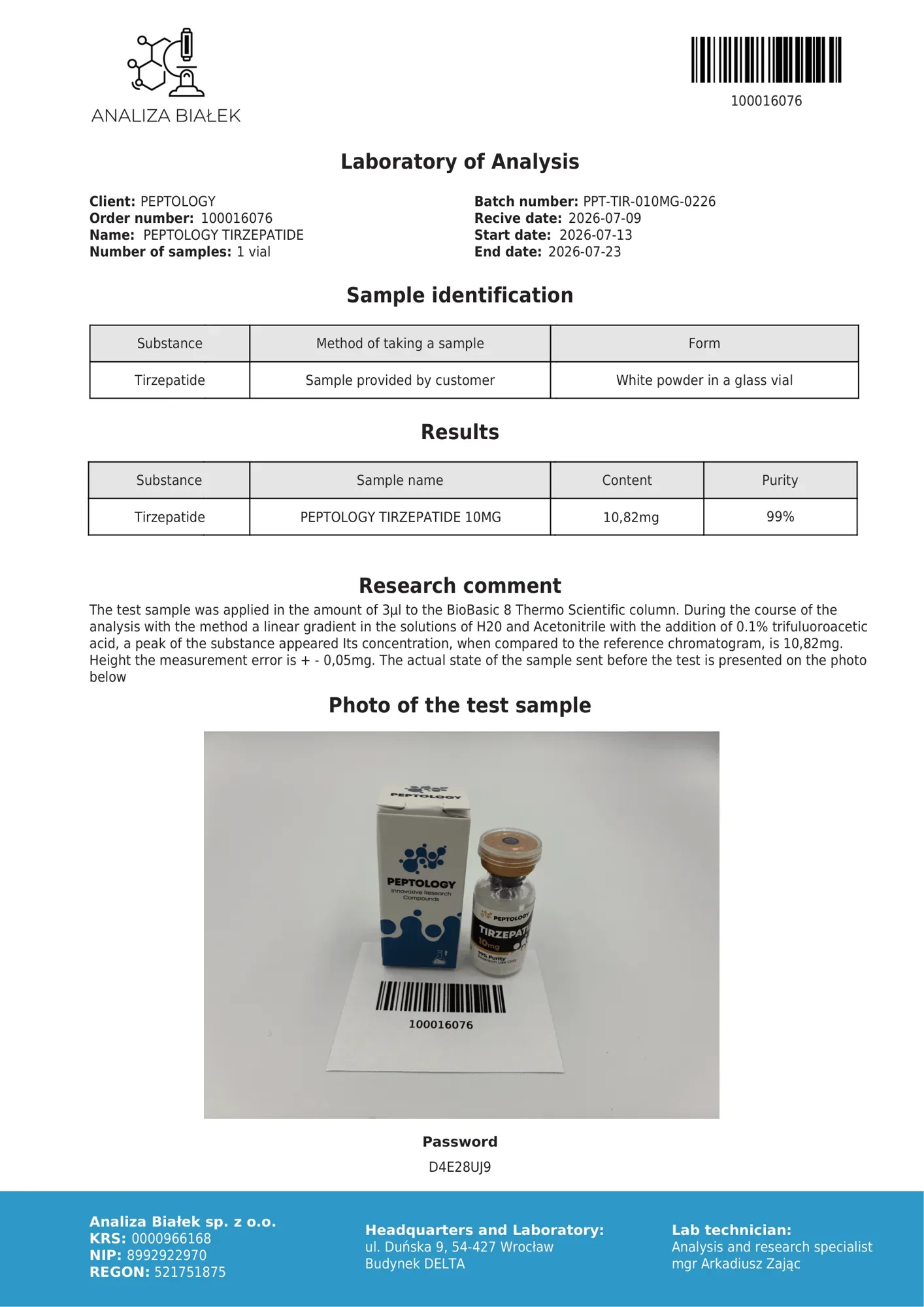
Tirzepatide - 15mg - Batch - 0226 - Purity & Endotoxins
Tirzepatide - 30mg - Batch - 0226 - Purity & Endotoxins
Shipping and payment
Orders placed by 15:00 on working days ship the same day and are delivered in 5–7 working days with BOX NOW. Shipping costs €2 and is free from €50; you pay on delivery – by card through the BOX NOW payment link, before you open the locker.
🚚 Delivery information
- Orders placed by 15:00 are dispatched the same day, delivery in 5–7 working days.
-
Shipping with BOX NOW, chosen at checkout. Free shipping from €50, otherwise €2.
Frequently asked questions about Tirzepatide
Where can I buy Tirzepatide in Cyprus and what does it cost?
In Cyprus you can buy Tirzepatide online from Peptology, from €59.00 (5mg: €59.00, 10mg: €99.00, 15mg: €125.00, 30mg: €159.00). Delivery in 5–7 working days with BOX NOW, free from €50; you pay on delivery – by card through the BOX NOW payment link, before you open the locker.
What is Tirzepatide?
Tirzepatide activates two receptors simultaneously. In the literature, the GLP-1 component is linked with activation of the GLP-1 receptor in central pathways, slowing of gastric emptying and glucose-dependent insulin secretion; the GIP component — with improved insulin sensitivity and nutrient processing. The combination of the two pathways is linked in many studies with a stronger metabolic effect than the approach of a single receptor (GLP-1). The results come from controlled laboratory and clinical studies.
In what form is Tirzepatide available?
As a lyophilised powder in a glass vial (5/10/15/30 mg). It is reconstituted in the laboratory with Peptide Matrix Water™ or bacteriostatic water; you can work out the concentration (mg/mL) with the <a href="/page/peptide-calculator">reconstitution calculator</a>.
How long does delivery take and how do I pay?
Orders placed by 15:00 on working days ship the same day and are delivered in 5–7 working days with BOX NOW. Shipping costs €2 and is free from €50; you pay on delivery – by card through the BOX NOW payment link, before you open the locker.