🇨🇾 BOX NOW delivery in 5–7 working days ✅ Pay on delivery 📦 Free shipping from €50

GLP-1 agonists in the literature: semaglutide, tirzepatide, cagrilintide, retatrutide
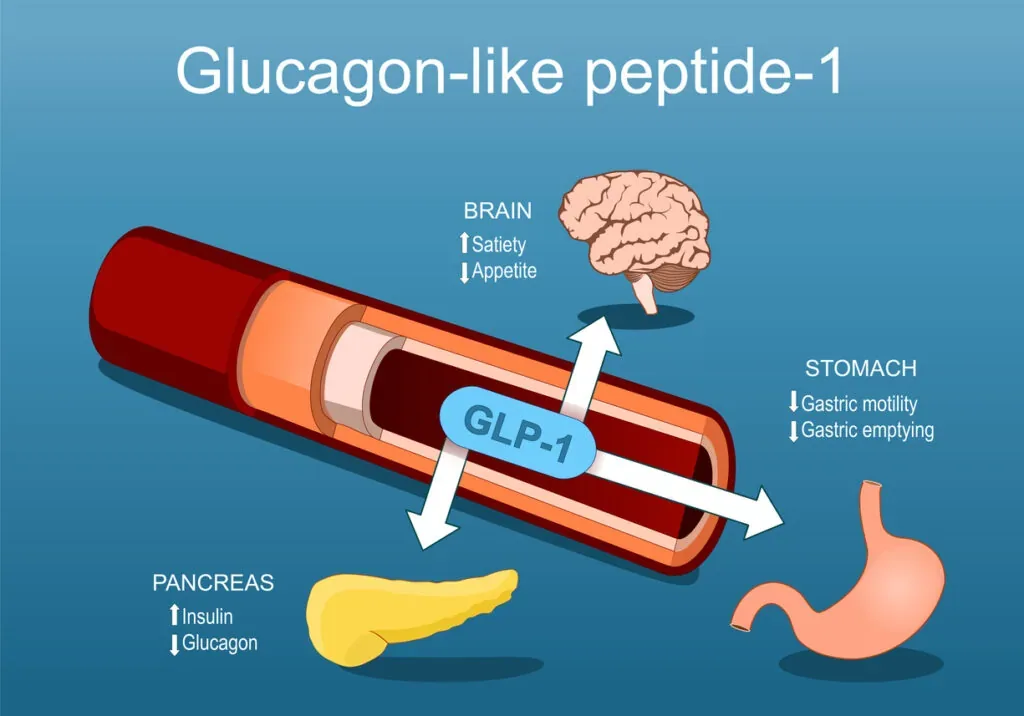
GLP-1 (glucagon-like peptide-1) is an endogenous hormone of the incretin family, secreted by the L-cells of the intestine after food intake. In the literature it is described as acting through the GLP-1 receptor (GLP-1R) and as being associated with:
GLP-1 agonists in the literature: semaglutide, tirzepatide, cagrilintide, retatrutide
Peptology · 2026-06-04

What are GLP-1 agonists?
GLP-1 (glucagon-like peptide-1) is an endogenous hormone of the incretin family, secreted by the L-cells of the intestine after food intake. In the literature it is described as acting through the GLP-1 receptor (GLP-1R) and as being associated with:
- glucose-dependent insulin secretion
- inhibition of glucagon secretion
- slowing of gastric emptying
- activation of the GLP-1 receptor in central pathways (hypothalamus, brainstem)
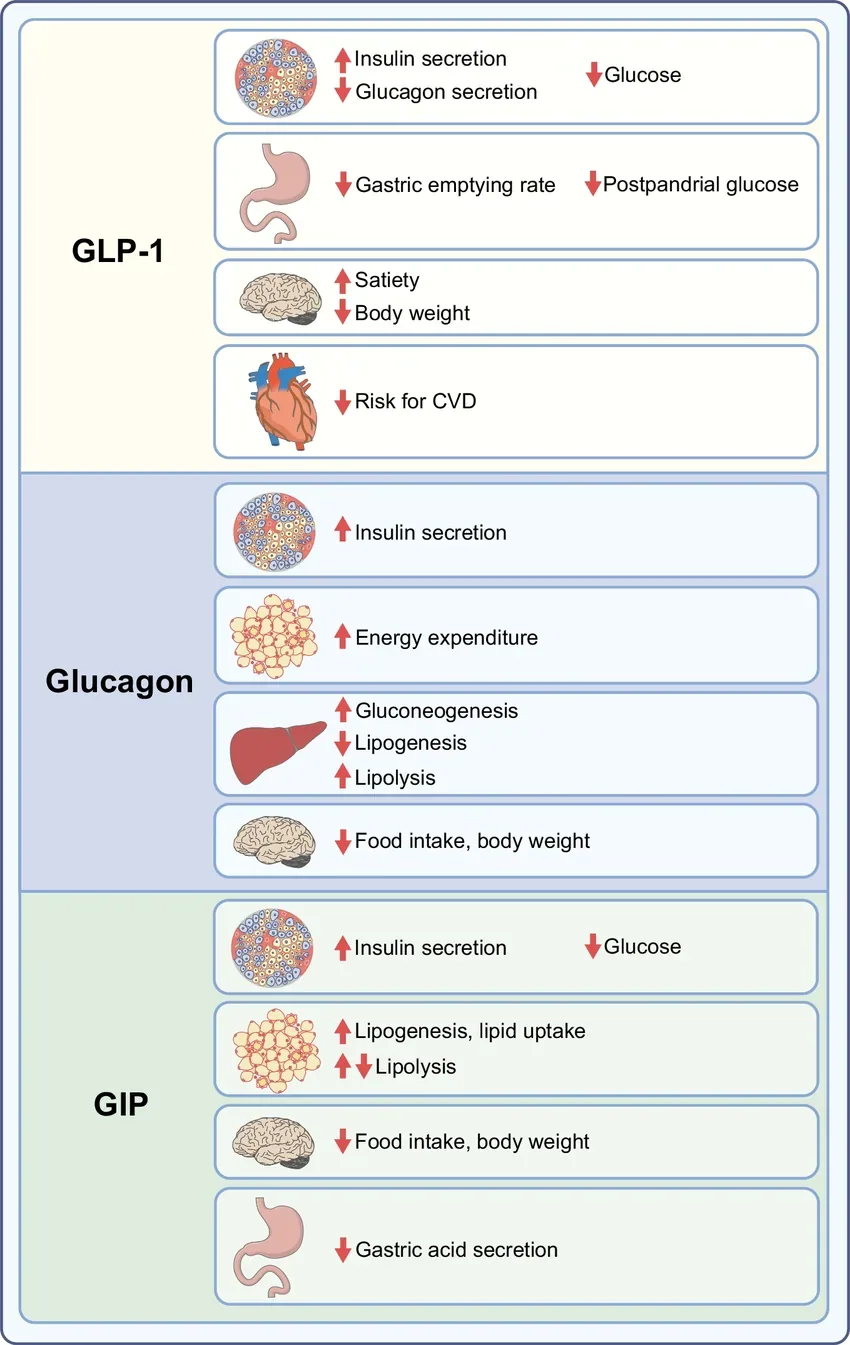
Endogenous GLP-1 is degraded within a few minutes by the enzyme DPP-4. GLP-1 agonists (GLP-1RAs) are synthetic analogues with modifications, such as amino-acid substitutions and attachment of a fatty chain that binds to albumin. These modifications increase resistance to degradation and the half-life. Newer compounds combine action on the GLP-1 receptor with other receptors: GIP, glucagon or amylin.
The main compounds in published studies
The percentages that follow are mean changes in body weight from baseline, as published in the respective randomised placebo-controlled studies. Each study had a different population, duration and design, so the results are not directly comparable with one another.
Semaglutide
- Single GLP-1 receptor agonist, with a fatty chain that binds to albumin; half-life approximately 7 days.
- In published studies, such as the phase 3 study STEP 1 (1,961 adults with overweight or obesity, 68 weeks), the mean change in body weight was −14.9% versus −2.4% with placebo.
- HbA1c and other metabolic markers are recorded as separate endpoints in several studies of the STEP programme.
Tirzepatide
- Dual agonist of the GIP and GLP-1 receptors; 39-amino-acid peptide with a C20 fatty chain and a half-life of approximately 5 days.
- In the phase 3 study SURMOUNT-1 (2,539 adults without diabetes, 72 weeks) the mean change in weight was from −15.0% to −20.9%, depending on the study group, versus −3.1% with placebo.
- In the literature, the additional action on the GIP receptor is described as the key characteristic that differentiates tirzepatide from single GLP-1 agonists.
Cagrilintide and the combination with semaglutide
- Cagrilintide is a long-acting amylin analogue, acting on amylin receptors (AMY) and calcitonin receptors (CTR). Endogenous amylin is co-secreted with insulin by the β-cells of the pancreas.
- In the phase 3 study REDEFINE 1 (3,417 adults with overweight or obesity, 68 weeks) the combination of cagrilintide and semaglutide was associated with a mean weight change of −20.4%, versus −14.9% with semaglutide alone, −11.5% with cagrilintide alone and −3.0% with placebo.
- In the phase 3 study REDEFINE 2, in adults with overweight or obesity and type 2 diabetes, the mean change in body weight was −13.7% versus −3.4% with placebo. The change in HbA1c is reported separately in the publication.
- In the Peptology catalogue the combination is available as CS10 (cagrilintide + semaglutide).
Retatrutide
- Triple agonist of the GLP-1, GIP and glucagon (GCGR) receptors; 39-amino-acid peptide with a half-life of approximately 6 days.
- In the phase 2 study (338 adults with obesity or overweight, 48 weeks) the mean change in weight in the highest dose group studied was −24.2%, versus −2.1% with placebo.
- This study compared retatrutide with placebo, not with semaglutide or tirzepatide. Comparisons between the compounds on the market come from meta-analyses of different studies (indirect comparisons) and not from head-to-head studies.
- The phase 3 TRIUMPH programme is continuing.
New directions in GLP-1 research
- Non-peptide agonists: small molecules such as orforglipron are being studied as oral GLP-1 receptor agonists, without a peptide structure; the first phase 2 data were published in 2023.
- Multiple agonists: after dual (GLP-1/GIP) and triple (GLP-1/GIP/glucagon) agonists, combinations with amylin analogues, such as cagrilintide, are being studied.
- Extended-release forms: formulations that release the substance over weeks or months are being investigated.
Mechanisms beyond metabolism
GLP-1 receptors have been identified outside the pancreas too: in the heart, the blood vessels, the kidney and the central nervous system. That is why GLP-1 signalling is also studied in cardiovascular, renal and neurobiological research models. In many of these fields the data are preliminary and do not allow conclusions beyond the design of each study.
Conclusion
GLP-1 agonists are among the most extensively studied classes of peptides in metabolic research. The literature describes a gradual evolution: from the single agonist (semaglutide) to the dual (tirzepatide), to the combination with an amylin analogue (cagrilintide) and to the triple agonist (retatrutide). Each molecule was studied in a different programme, with different populations and durations. That is why the published percentages describe each study separately and do not constitute a ranking of the molecules.
The Peptology products mentioned in the article are intended exclusively for laboratory research and not for human use.
References
- Drucker DJ. Mechanisms of Action and Therapeutic Application of Glucagon-like Peptide-1. Cell Metabolism, 2018.
- Wilding JPH, et al. Once-Weekly Semaglutide in Adults with Overweight or Obesity (STEP 1). New England Journal of Medicine, 2021.
- Jastreboff AM, et al. Tirzepatide Once Weekly for the Treatment of Obesity (SURMOUNT-1). New England Journal of Medicine, 2022.
- Jastreboff AM, et al. Triple–Hormone-Receptor Agonist Retatrutide for Obesity — A Phase 2 Trial. New England Journal of Medicine, 2023.
- Garvey WT, et al. Coadministered Cagrilintide and Semaglutide in Adults with Overweight or Obesity (REDEFINE 1). New England Journal of Medicine, 2025.
- Davies MJ, et al. Cagrilintide–Semaglutide in Adults with Overweight or Obesity and Type 2 Diabetes (REDEFINE 2). New England Journal of Medicine, 2025.
- Wharton S, et al. Daily Oral GLP-1 Receptor Agonist Orforglipron for Adults with Obesity. New England Journal of Medicine, 2023.