🇨🇾 BOX NOW delivery in 5–7 working days ✅ Pay on delivery 📦 Free shipping from €50

Retatrutide: how it works and what the data show
Retatrutide (LY-3437943) is an experimental peptide agonist that triply activates the GLP-1, GIP and glucagon receptors . Retatrutide is studied in metabolic research models, including obesity and type 2 diabetes.
Retatrutide: how it works and what the data show
Peptology · 2026-06-04

What is Retatrutide?
Retatrutide (LY-3437943) is an experimental peptide agonist that triply activates the GLP-1, GIP and glucagon receptors. Retatrutide is studied in metabolic research models, including obesity and type 2 diabetes.
Its structure is designed to contain a lipophilic side chain, which prolongs the half-life and allows once-weekly administration in the studies.
Mechanism of action – what it does in the body
-
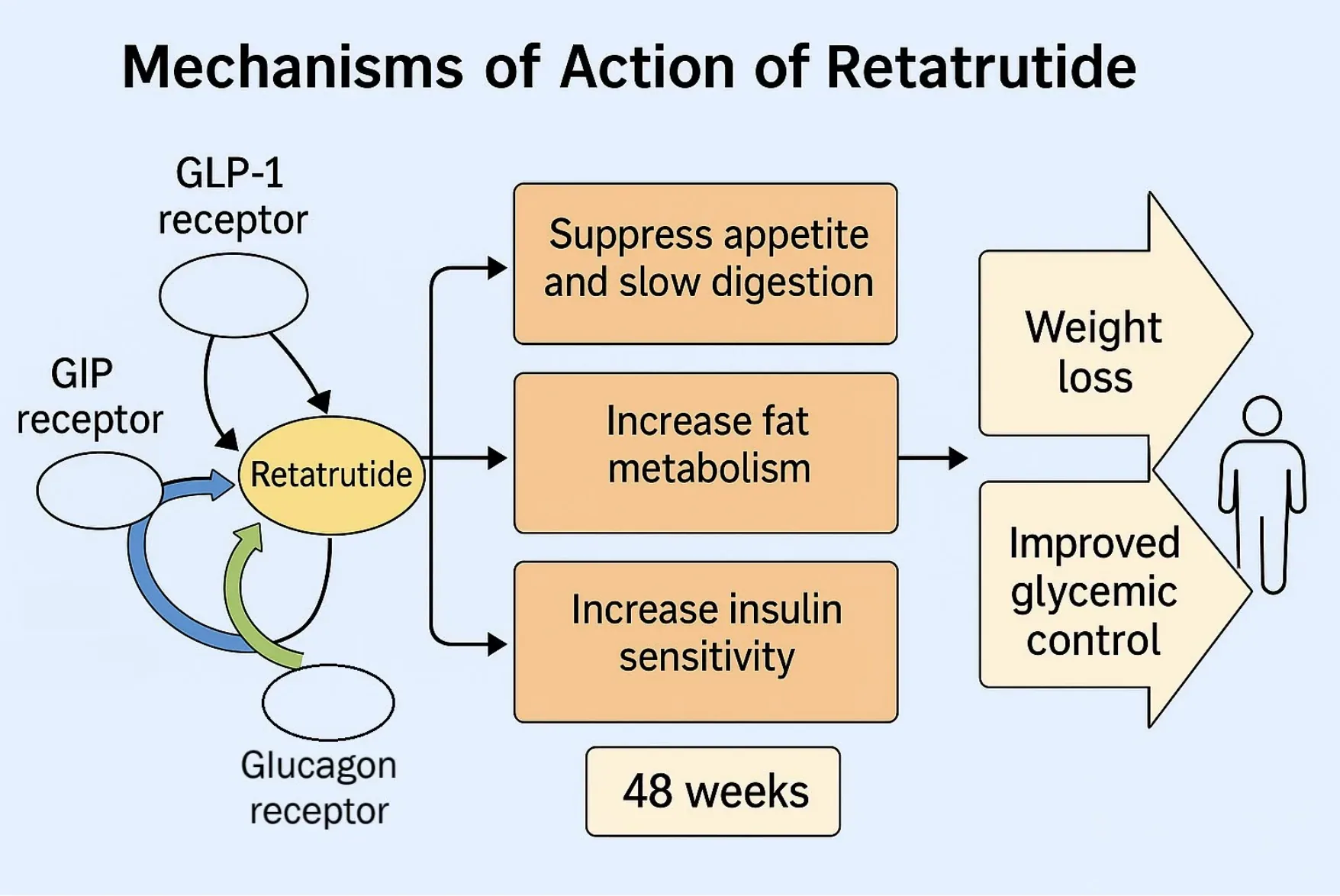
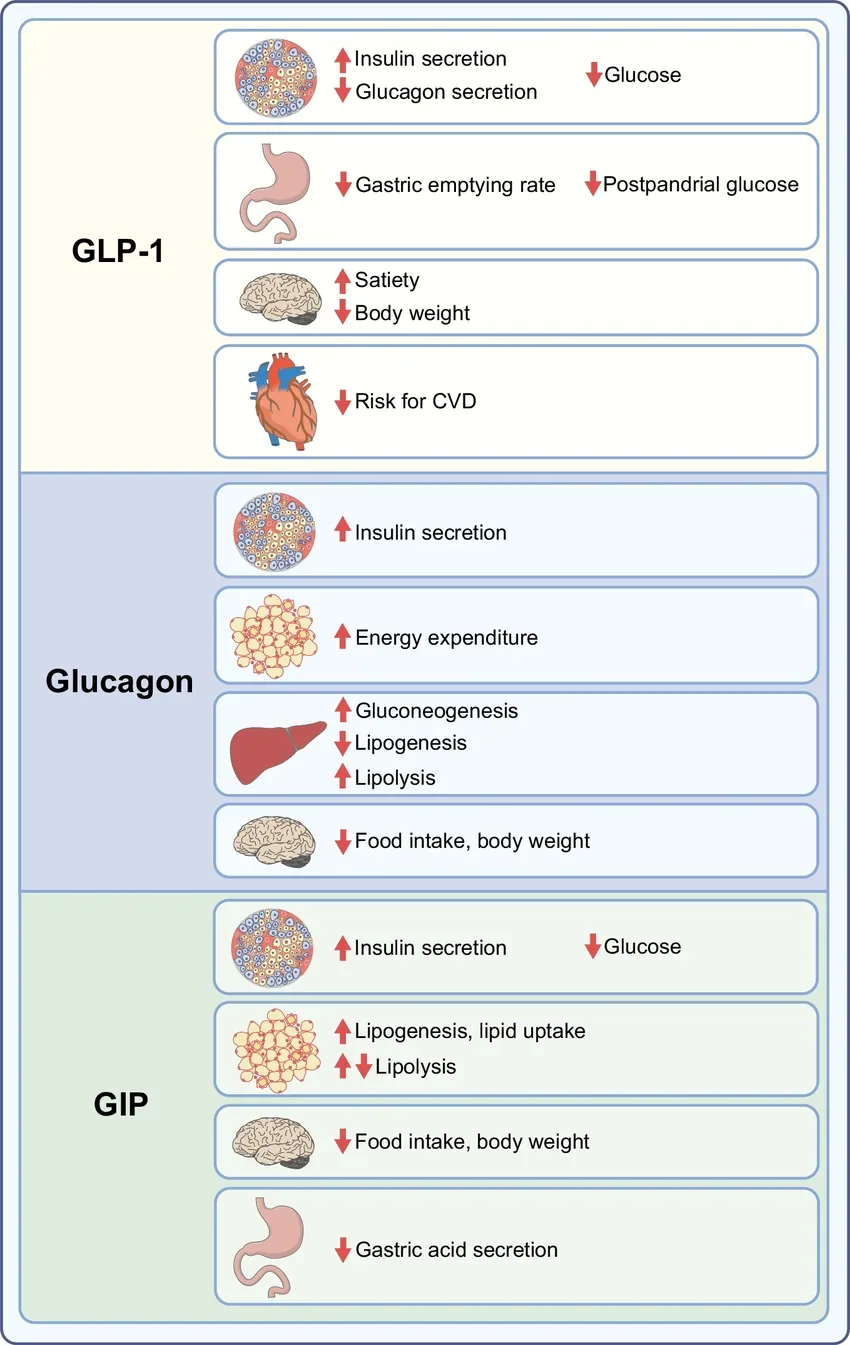
GLP-1 receptor (GLP-1R): enhances glucose-dependent insulin secretion, delays gastric emptying and suppresses appetite.
-
GIP receptor (GIPR): Retatrutide is ~8.9 times more potent than natural GIP — improving the post-meal insulin response.
-
GCGR (glucagon receptor): although with lower activity (≈30–40%), activation of GCGR improves liver metabolism, mobilisation of liver lipids and energy expenditure.
-
Multiple signalling effect: the combination promotes weight loss through reduced appetite + higher metabolism, as well as improved glycaemic and lipid markers.
Clinical data – what the stages of the trial showed
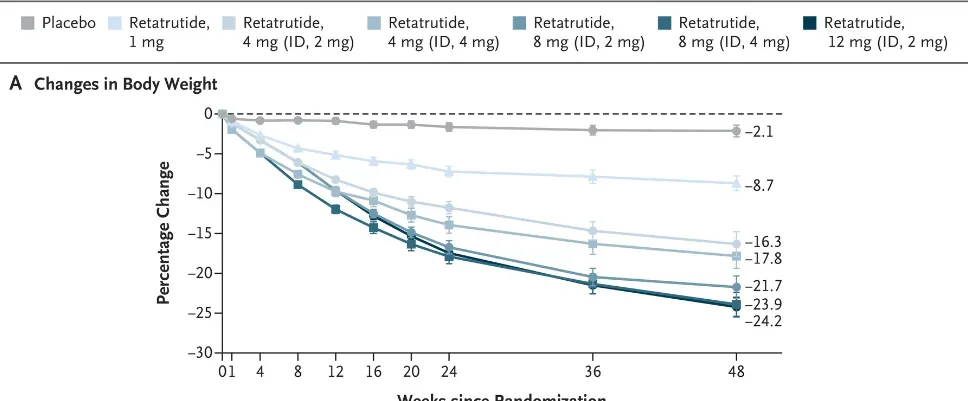
48-week study (Phase 2, MASLD)
-
High doses (8 and 12 mg) led to a mean weight loss of 22.8% and 24.2% from baseline.
-
Liver fat (LF): at 12 mg — reduction of up to –82.4% after 24 weeks and –86.0% after 48 weeks.
24-week study in obesity
-
Mean weight loss: 17.5% at the 12 mg dose.
Patients with type 2 diabetes
-
Study in The Lancet: Retatrutide significantly improved glycaemic control and was associated with a significant reduction in body weight, with an adverse-event profile similar to other GLP-1 agonists such as semaglutide and tirzepatide.
How does Retatrutide compare with Semaglutide and Tirzepatide?
-
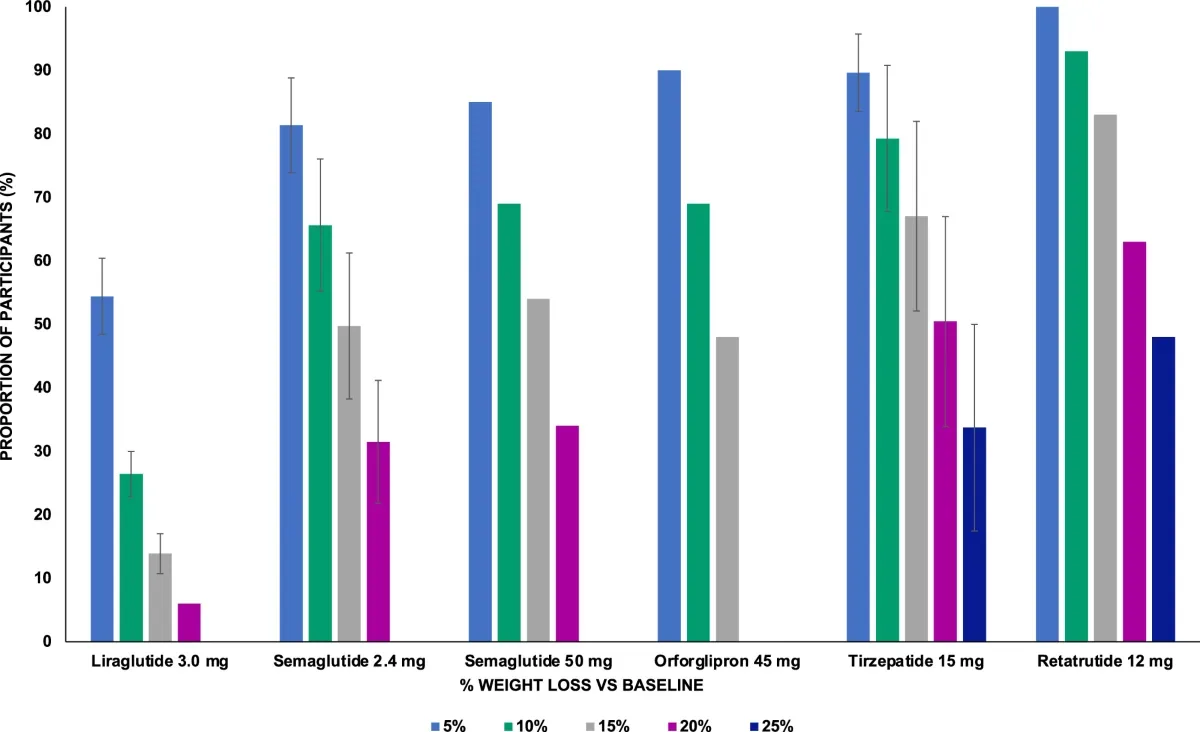
Tri-receptor synergy: combines appetite suppression, insulin support and lipid mobilisation — a stronger metabolic action than the dual agonists.
-
Weight loss in studies: up to 24% at 48 weeks (phase 2, versus placebo) – in separate studies ~15% with semaglutide and ~22% with tirzepatide, not in a head-to-head comparison
-
Additional data: regulation of liver fat, triglycerides and apoC-III (up to –40.6% and –38% respectively) — as recorded in clinical studies.
Structural and pharmacological optimisations
-
It contains a lipophilic condensed segment, ensuring high durability and weekly administration.
-
It is being studied in phase III programmes for diabetes, MASLD and obesity.
Brief summary: mechanism → effect
|
Target/receptor |
Effect of retatrutide |
Clinical outcome |
|---|---|---|
|
GLP-1R |
↑ insulin, ↓ appetite, ↓ gastric emptying |
Better glucose, satiety |
|
GIPR |
Strong insulinogenic response |
Post-meal control |
|
GCGR |
Energy mobilisation, lipid mobilisation |
Increased metabolism |
|
All + accumulation |
Synergistic metabolic effect |
Weight loss up to –24.2 |
Conclusion
Retatrutide is a triple GLP-1/GIP/GCGR agonist — in phase 2 studies the combination of appetite suppression, increased metabolism and glycaemic regulation was associated with a mean reduction in body weight of up to 24.2%, as well as an improvement in liver fat and metabolic markers. The phase 3 programme is continuing.
Peptology offers Retatrutide exclusively for laboratory research, with an HPLC/MS certificate for every batch. See price and purchase of Retatrutide.