
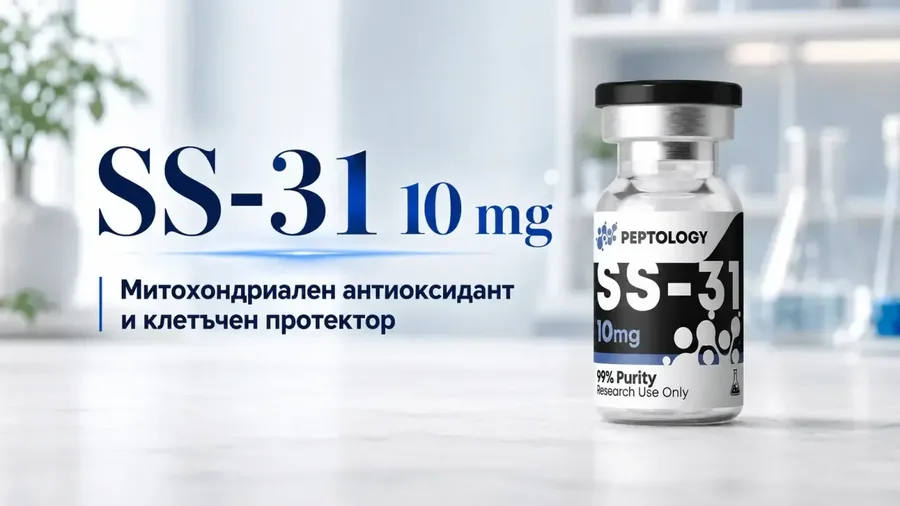
SS-31 (Elamipretide): A New Era in Mitochondrial Regeneration and Cellular Energy
A detailed comparative analysis of the therapeutic potential of the peptide SS-31: how targeting cardiolipin in the inner membrane restores ATP synthesis, and why this mechanism is superior to traditional antioxidants.
Every vital biological process in eukaryotic organisms depends fundamentally on the ability of cells to convert nutrients into usable energy. With the passing of cellular age, under the influence of systemic chronic stress and exogenous toxins, this ability declines progressively. At the root of this degenerative decline lies the phenomenon of mitochondrial dysfunction. When these cellular organelles suffer structural damage, they not only stop producing adenosine triphosphate (ATP) effectively, but also become the main source of reactive oxygen species (ROS). This triggers a chain of oxidative damage that destroys cellular DNA and accelerates apoptosis. In modern biotechnology, the discovery of the peptide SS-31 (also known as Elamipretide) represents a significant research breakthrough. Unlike classical therapeutic strategies, this compound penetrates cellular barriers passively and acts directly on the inner mitochondrial membrane, addressing the pathology at its source.
1. Molecular mechanism of action: binding to cardiolipin
The most significant drawback of conventional antioxidants (such as vitamin C, E or resveratrol) is their inability to accumulate in sufficient concentrations inside the mitochondria themselves. They neutralise free radicals after the fact, once these have already left the organelle and caused damage in the cytoplasm. SS-31 shows a completely different, structurally oriented approach. Its mechanism of action is based on a specific physicochemical interaction with cardiolipin – a unique polyglycerol phospholipid, found exclusively in the inner mitochondrial membrane and critical for shaping its folds (cristae).
- Prevention of peroxidation: Cardiolipin is extremely rich in polyunsaturated fatty acids, which makes it the first and easiest target for free radicals. When cardiolipin is oxidised, it loses its ability to hold together the protein complexes of the respiratory chain. The SS-31 molecule binds selectively to cardiolipin through electrostatic and hydrophobic interactions, creating a molecular shield that blocks the access of oxidising agents.
- Optimisation of electron transfer: The stabilisation of cardiolipin makes it possible to maintain the correct architecture of the mitochondrial cristae. This keeps the supercomplexes of the respiratory chain in an optimal spatial relationship, which drastically reduces the “leakage” of electrons and minimises the formation of superoxide anions already at the point of their generation.
2. Therapeutic potential and systemic benefits of SS-31
Because mitochondria are present in all tissues with high metabolic activity, the effects of stabilising their membranes through SS-31 are observed in multiple systems:
Neuroprotection and cognitive ability: The human brain makes up only 2% of body weight, but consumes over 20% of the ATP produced. The mitochondrial deficit in neurons is directly linked to cognitive decline and the loss of synaptic plasticity. Research around the SS-31 peptide indicates that the peptide successfully crosses the blood-brain barrier, protects cortical neurons from glutamate-induced cytotoxicity and suppresses microglial activation, leading to the regression of chronic neuroinflammation.
Cardiovascular resilience: The myocardium requires a constant flow of energy to maintain its contractile function. In ischaemic conditions or in reperfusion injury, the structure of cardiolipin breaks down instantly. The application of Elamipretide in research models demonstrates preservation of cardiac tissue, a reduction in the size of the infarct zone and improved left ventricular function through the optimisation of energy transfer in cardiomyocytes.
Regeneration of skeletal muscles: In states of physical exhaustion or age-related sarcopenia, the mitochondria in muscle fibres undergo fragmentation. Restoring the membrane potential through this peptide increases the capacity for physical exertion and accelerates the regenerative processes in the myofibrils after microtrauma.
3. Classification in the “Peptides for cellular energy and regeneration” category
In the context of modern research focused on longevity science, SS-31 holds a strategic place in the broader Peptides for cellular energy and regeneration category. This category differs fundamentally from the classic stimulants of the central nervous system (such as caffeine or synthetic nootropics), which deplete cellular reserves to deliver a temporary burst of vitality.
Products for cellular energy aim at a metabolic restart. They work on the cell’s endogenous ability to repair itself. Unlike bulk dietary supplements, which go through a complex process of digestion and lose most of their bioavailability, the bioactive peptides in this group ensure targeted delivery. In research protocols, in order to preserve the delicate structure of these molecules, they are often combined with specialised solvents, which prevent premature hydrolysis and changes in the isoelectric point of the active substance. You can find suitable solutions for handling and preserving them in the dedicated category for dissolving peptides.
4. Restoration of bioenergetics and cellular respiration
The electron transport chain is a sequence in which each step depends on the previous one. Elamipretide acts as a structural optimiser that guarantees that no electron is lost along the way:
Increase in ATP levels
Through the direct optimisation of electron transfer, cells quickly restore their baseline ATP levels. This leads to increased cellular vitality and resilience against external stress factors.
Drastic reduction of ROS
ROS (Reactive Oxygen Species) are the reactive forms of oxygen. As the chain functions correctly, the release of these harmful radicals is reduced at its root, stopping the intracellular destruction.
5. Advantages and limitations in SS-31 research
- Targets the source of cellular damage in the inner membrane directly.
- High bioavailability and rapid penetration through cellular barriers.
- Proven synergy with products from the Cellular energy section.
- At Peptology you can buy this peptide online.
- Requires extremely precise dosing and adherence to laboratory protocols.
- Sensitive to thermal shock before full reconstitution.
- Typical oral antioxidants (CoQ10) are cheaper, but lack its cellular permeability.
6. Comparative analysis: SS-31 vs. typical mitochondrial cofactors
To understand the real value of SS-31 in research activity, it is necessary to compare it with the classic molecules used to support the mitochondria:
| Comparison parameter | SS-31 (Elamipretide) | Coenzyme Q10 (CoQ10) | Alpha-lipoic acid (ALA) |
|---|---|---|---|
| Site of action | Specifically in the inner membrane | Mitochondrial matrix and lipid droplets | Cytoplasm, plasma and extracellular environment |
| Interaction with lipids | Binds directly to the damaged cardiolipin | Acts as a mobile electron carrier | Serves as a general water-soluble and fat-soluble antioxidant |
| Effect on damaged structure | Restores the natural architecture of the cristae | Cannot repair the structure, only transfers electrons | Helps regenerate other depleted antioxidants |
| Cellular permeability | Passes freely without energy consumption | Low oral absorption; requires lipid emulsions | Metabolised and eliminated quickly by the body |
| Value / Quality | Professional category | Low cost / Basic effect | Supplement for mass use |
7. Scientific data on the stabilisation of membrane permeability
In the academic literature, the biophysical properties of SS-31 are the subject of detailed research using techniques such as fluorescence spectroscopy and electron microscopy. It has been shown that, in states of induced cellular ageing, the inner membrane undergoes a process of “fluidisation” and loses its electrical potential ($$\Delta\Psi_m$$). Scientists found that the addition of the SS-31 peptide restores the stability of membrane permeability. The peptide acts as a molecular bond that seals the displaced lipid heads of cardiolipin. This prevents the uncontrolled opening of the mitochondrial permeability transition pores (mPTP) – an event that usually signals the irreversible end of the life of the cell through the release of cytochrome c into the cytoplasm.
8. Laboratory guidelines for handling and reconstituting peptide chains
To ensure that the biological activity of SS-31 is preserved during experiments, strict adherence to the following handling rules is necessary:
- Choice of dissolving liquid: Reconstitution should be carried out exclusively with sterile media (for example, bacteriostatic water). Ordinary distilled water often contains microscopic traces of ions that can catalyse oxidative processes in the peptide bond.
- Dissolving method: The liquid is introduced slowly, at an angle, sliding down the inner surface of the glass vial. Injecting the jet directly under pressure onto the lyophilised product can cause mechanical rupture of the peptide chains.
- Temperature control: Once it has passed into the liquid phase, the solution becomes extremely unstable. It must be kept in refrigeration equipment at a constant temperature between 2°C and 8°C. Freezing the already dissolved peptide is not recommended, as the formation of ice crystals destroys its tertiary structure.
Ensure maximum accuracy and purity in your research
Do not compromise on the quality of the materials in your laboratory. See the price and order the SS-31 peptide.
Buy the SS-31 peptide from Peptology9. Conclusions and future prospects in mitochondrial science
All the accumulated scientific data point to a single conclusion: conventional methods of combating cellular ageing and energy deficit pale in comparison with the precision of modern peptide therapy. The peptide SS-31 (Elamipretide) does not merely cover the symptoms of fatigue, but regenerates the very foundation of cellular metabolism. At Peptology we strive to provide excellent quality and transparent prices for all your research and innovative projects in the field of cellular health.